
Lynx-R2 Headset Revealed With Surprisingly Wide Field-of-View in a Tiny Package

29

Lynx has unveiled the Lynx-R2, a significant upgrade over its original R1 mixed reality standalone which aims to capture the enterprise and prosumers market.

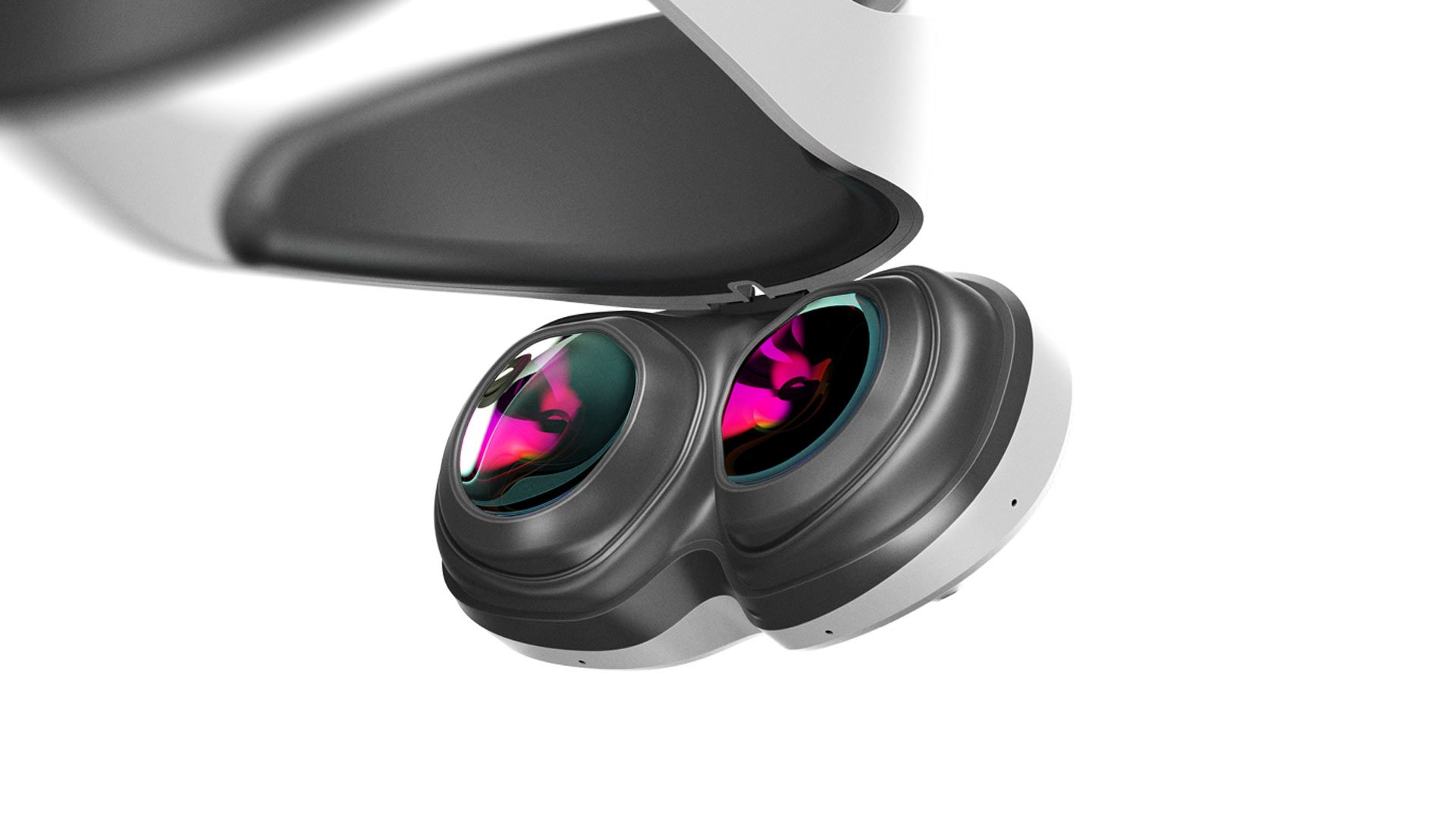
The France-based startup considers R2 is a significant step forward, featuring new aspheric pancake lenses from Hypervision which are said to deliver 126° horizontal field-of-view (FOV)—notably larger than R1’s 90°, or Quest 3’s 110° horizontal FOV.

Paired with dual 2.3K LCD displays delivering more than 24 pixels per degree (PPD) at the center, R2 is said to deliver “crisp text and image rendering for industrial and medical use cases.”
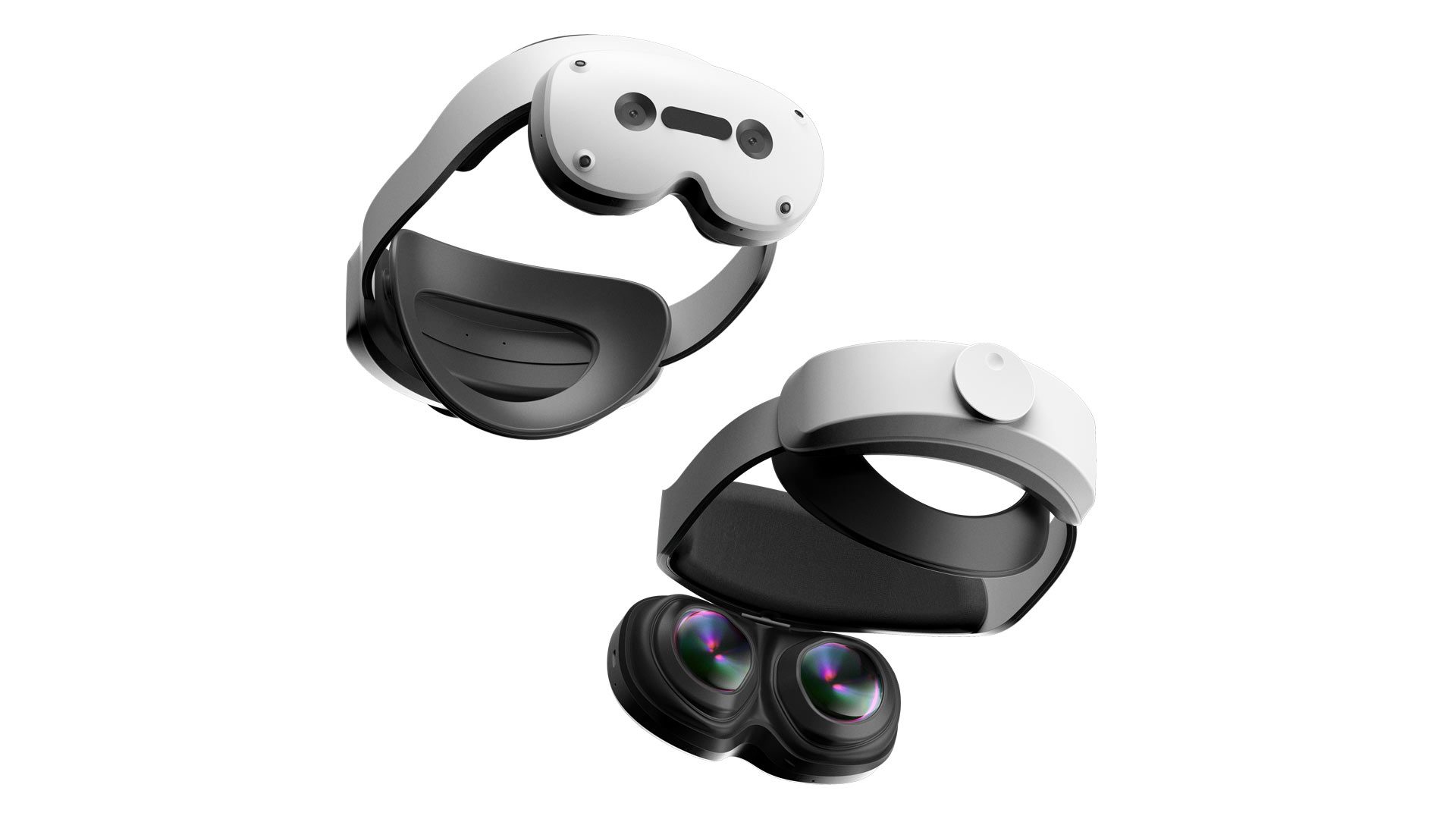
Image courtesy Lynx Mixed Reality

While the new standalone headset features the same flip-up design as its predecessor, R2 is powered by Qualcomm’s Snapdragon XR2 Gen 2, offering substantial gains in GPU and AI performance over R1, which was introduced in 2021 with the older Snapdragon XR2 Gen 1.

Other features including 6DOF head tracking, hand-tracking, controller and ring tracking, plus a full-color four-sensor Sony camera array that also includes depth sensing for advanced computer vision.

Originally planned to ship with Android XR, Lynx-R2 is actually set to launch with Lynx OS following Google’s decision to withdraw support. Lynx OS is however based on Android 14, meaning it can sideload APKs in addition to supporting OpenXR 1.1.
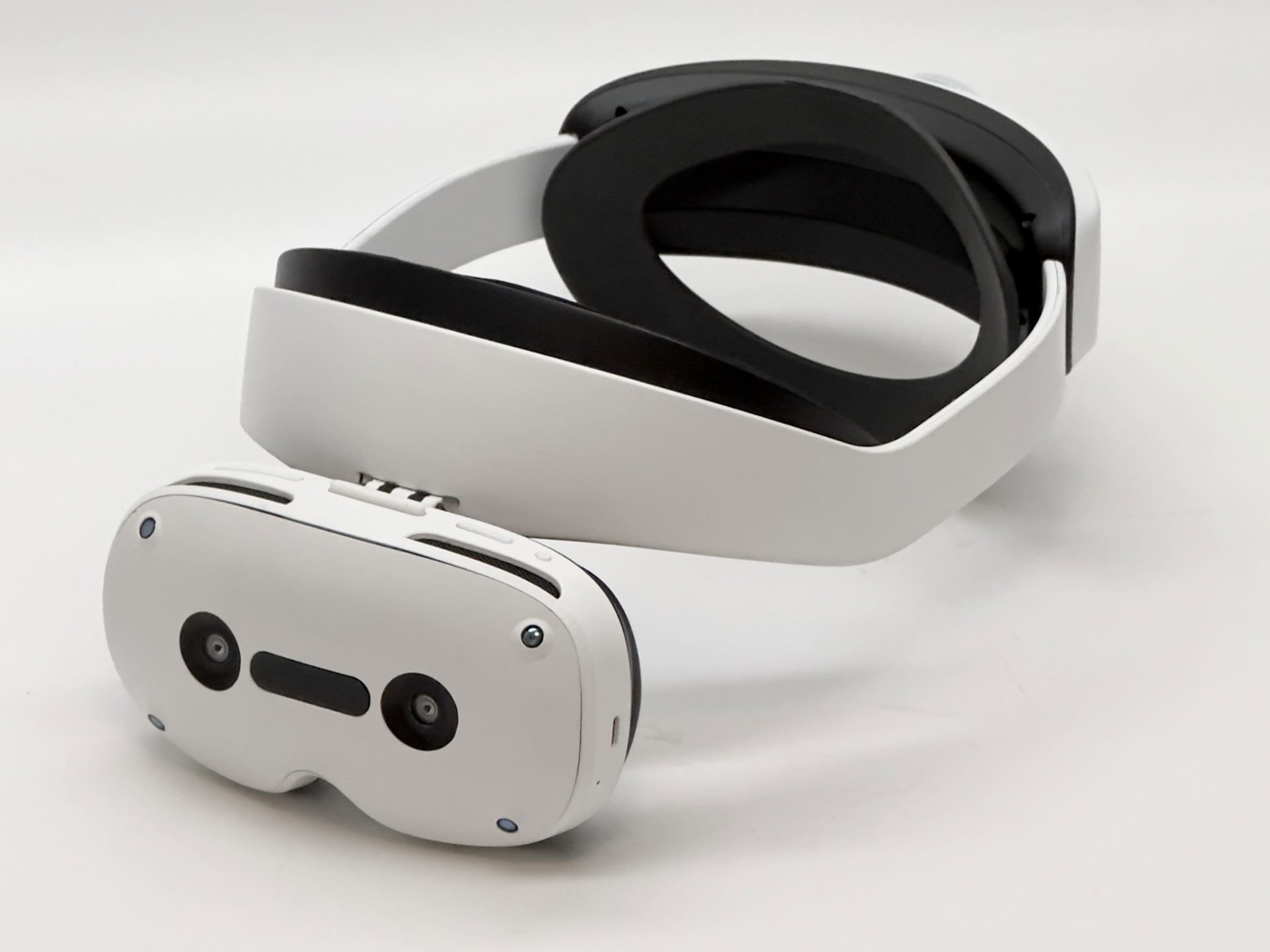
Image courtesy Lynx Mixed Reality

Additionally, Lynx says it will release “all the electronic schematics of the headset motherboard and the mechanical design blueprints,” which is said to allow academics
and hobbyists to freely mod the device.

This will also include raw sensor access so developers can enable their own computer vision applications, as well as full offline functionality for sectors such as defense, healthcare, and industry, Lynx says.

SEE ALSO
'Manifold Garden' Studio to Release Room-scale VR Puzzler 'Hotel Infinity' November 13th

“With the R1, we proved that a small, independent team could build a world-class mixed reality device,” said Stan Larroque, founder and CEO of Lynx Mixed Reality. “With the R2, we are proving that an open ecosystem is not just a philosophy, but provides a superior way to approach these devices. We have listened to 3rd party developers and enterprise users. They didn’t just want more pixels; they wanted a wider field of view, faster processing, and total ownership of their sensors. The R2 delivers just that. I believe the Lynx-R2 is a great VR headset, and will provide the best MR experience.”

There’s no official launch date yet. Lynx says R2 will be available for order “starting this summer” via the official Lynx portal as well as authorized enterprise resellers.

In the meantime, we’re still learning about specs, but this is what Lynx has indicated so far:

Lynx-R2 Specs

Display
2.3K per eye LCD
Lens Type
Hypervision Aspheric Pancake
Pixels Per Degree (PPD)
>24 PPD (center)
Field-of-View 126° horizontal, 133° diagonal
Refresh Rate Not specified
IPD Adjustment Yes
Eye Relief Adjustment Yes
Glasses Support Yes
Processor (SoC)
Qualcomm Snapdragon XR2 Gen 2
Cooling System
Active (dual silent fans)
Operating System
Lynx OS (Android 14–based)
OpenXR Support
Yes (OpenXR 1.1)
Passthrough Type
Full-color video passthrough (Sony RGB)
Passthrough Resolution 3K × 3K per eye
Tracking Cameras
4 (hand, ring, controller & head tracking)
Depth Camera Yes
IR LEDs Yes
Supported Engines
Unity, Unreal, StereoKit
Battery Placement Rear-mounted
Battery Access
User-replaceable
Strap Type Rigid
Weight Not specified

This article may contain affiliate links. If you click an affiliate link and buy a product we may receive a small commission which helps support the publication. See here for more information.

Well before the first modern XR products hit the market, Scott recognized the potential of the technology and set out to understand and document its growth. He has been professionally reporting on the space for nearly a decade as Editor at Road to VR, authoring more than 4,000 articles on the topic. Scott brings that seasoned insight to his reporting from major industry events across the globe.
  • polysix

    stopped reading at “LCD” . No thanks.

    • Andrew Jakobs

      Of course OLED would be nicer, but if the image quality of these LCD's is better as my Pico 4 and with MUCH wider FoV, and an affordable (below 700 euro's) price, I wouldn't mind. My gripe with this one is the used 'old' soc, they should have gone with at least the same soc as the Valve Frame.

      • JanO

        One aspect of using an XR2 over the regular SD8 soc is the amount of cameras it can simultaneously handle… Since Lynx is geared towards XR, this makes sense.

      • kraeuterbutter

        as JanO mentioned..
        another point: the SOC of the Frame might be not that much more powerful in praxis…

    • zaelu

      You didn't lost much… I watched their keynote on YouTube and it was cringy. They have a nothing burger…

    • Sofian

      The small uOLED panels would not allow the same FOV.
      TCL has announced a 2.5K OLED with a size comparable to LCD panels but don't know if it's in production yet.

      • kraeuterbutter

        micro Oled ?
        because: "normal" OLED -> no Thanks..
        all my OLED-HEadsets i had so far – without microoled – had mura

  • XRC

    Great to see this team taking a second swing after the difficulty of productivizing R1; hardware is really tough to get right. Congratulations on their new device, look forward to trying out

  • This sounds pretty good. Now, obviously I won't be getting, as I think it's just for businesses and such, but maybe it could point to a Quest 4 or other competing consumer VR headset getting in that FOV range too, or maybe even higher, and without sacrificing any of the specs in other areas of the display. That would be great.

  • Naruto Uzumaki

    im sick and tired of 1 million headsets all of the missing something every headset does 1 for 4 things good but rest very bad there is no headset that does all things good the steam frame or other name dekard would be more useful if it run meta os and you could play all 500 games meta has standalone also meta has Ai frame generation so you run the game at 35 fps standalone and you generate fake frames to 70 fps
    the perfect headset would be:
    -meta OS FOR 500 games standalone
    -Ai frame generation for 60% more power
    -eye tracking FFR FOR 60% more power
    -water cooling and battery in the back for 60% more power power the quest 3 chip is super underclocked because they put battery in the front and panels are undeclocked also because they generate to much heat and meta has very bad cooling
    we are never going to get a perfect headset

    • Rogue Transfer

      Some corrections:

      1) There are only a couple handful of Quest exclusive standalone games of note. Nearly everything else is available for Steam Frame to run locally or stream from a PC VR version.

      2) Meta isn't using AI-frame generation. 'Application Spacewarp' uses pixel motion data to calculate future pixel positions. Unfortunately, it's limited to only some types of visuals(e.g. can't cope with semi-transparent objects, like glass, reflective/refractive water and other things, limiting its use).

      3) Eye-tracked Foveated Rendering for standalone graphics in practice results in less benefit – around 20~30%(this is due to the shaders being already very simple & fast to run, so cutting them saves less than say, on PSVR2 or PCVR where the pixel shaders are more complex and more time can be saved).

      There's always compromises with everything, sadly. Even more so for standalone devices, which have to pack everything in and have very little performance/battery power to do anything as well as it can be done otherwise.

      • kraeuterbutter

        what do you mean: "nearly every game is available for the steam frame locally" ?
        i bet the standalone Store will be very empty at the beginning..
        comparable with the Pico4 at the beginning..
        (and the pico4 was using the same chip as the Quest2, the Pico4 ultra the same as the Quest3 (but with more memory))

        so even with the same chip it took some time (and money) to get lot of games for it.
        valve will not spend lot of money for other games.. never did..
        so..

    • Cl

      Thats a silly thing to say. If steamframe used meta OS i would lose all interest. Why do you think meta OS would be better than steam OS? Do you think steam doesnt have VR games? A handful of exclusive games that meta seem to be backing away from?

      • kraeuterbutter

        steam has vr-games… for x86

        but where are the games you wana run locally ?

    • Arno van Wingerde

      And I am sick and tired of trucks that cannot accelerate like sports cars. It is hard to hit all the spots without breaking physics and financial rules. Water cooling on a headset? Seriously?

  • sfmike

    Pancake lens rule! I hope we get these refinements in consumer headsets.

  • Albert Hartman

    There's a role for a high graphical performance HMD w/tracking and passthru for attaching to a gaming PC. That configuration is where the highest tech will be found for awhile.

  • VirtualJedi

    Curious what "Ring" tracking means

    • Steve R

      yes combining hand tracking with accelerometer on a ring seems like it could be amazing.

  • pixxelpusher

    Hypervision have lenses that have an "undistorted Field of View up to 240°. Why not use any of those? 150° or 180° would have been better.

    • Michael Griffin

      They don't exist in the market yet; they're just prototypes. You also need computing power strong enough to run a fov like that, and that mobile chip would die trying to render 150, 180, or 240 fov if it existed in a usable form. Going up in fov generally is much more demanding than just raising render resolution. Fov of 126 is very good in the VR world and plenty for immersion and a good experience.

      • pixxelpusher

        Well the 126° lenses being used here didn't exist in the market yet either, they were developed especially for the R2 with help from Hypervision. They could have developed any of the lens designs Hypervision has for market and they have working prototypes up to 240°. The 150-180 FOV range is the perfect middle ground really especially for coverage of the focal plane.

        • Michael Griffin

          That’s not how that works at all. Companies like Hypervision have prototypes at different stages of development. The Much larger fov hybrid lenses you are talking about have a couple more years to bake. So NO, you can’t just choose a lense design that isn’t ready, snap your fingers and make it be ready for your product that is launching now.

          • pixxelpusher

            Where are you getting your information that Hypervision’s lens designs are not ready for production? They have demo’d them countless times going back even 2 years ago. Arthur at Hypervision even said way back then they are ready to work with companies to manufacture them.

          • Michael Griffin

            And Artur said recently they are still a few years from production…. Demoing a one off prototype is very different from mass producing a finished product with the software and other hardware to go with it.

          • JanO

            Common sense, look into it!

        • Michael Griffin

          Designing devices like this are about timing and what’s available for the product you are trying to ship now.

        • kraeuterbutter

          pimax was always going for big FOV…
          AND: there current headsets have less (and less) FOV…
          the FOV gets smaller, not bigger..
          and – as a former Pimax-owner – i understand that..
          with big FOV there come several problems..
          and many (maybe more than you think) pimax-Users appreciate the current way, to sacrifie a bit of fov for gaining better visials (more ppd, less distortions, no "popping" of elements, more performance, …)

  • zaelu

    I think the biggest announcement (slip) was that in near future will be an XR2 Gen 3 chip…. which tells a lot more than the product itself.