

Meta Inches Into Health Wearables with New Food Logging Feature for Ray-Ban Smart Glasses

3

Meta announced it’s pushing an update to Ray-Ban and Oakley Meta smart glasses that’s slated to make nutrition tracking easier by letting Meta AI visually suss out food before you eat it.

The News

Over time, the company says that a user’s food log will inform “increasingly personalized insights that get more useful, helping you make healthier, more informed choices.”

Meta says it will be somewhat of a manual process though, as users need to prompt Meta AI to log their food in addition to inputting specific nutrition goals.

Ray-Ban Meta (Gen 2) | Image courtesy Meta

While we’re not there yet, Meta says in the future glasses will be able to understand what you’re eating and automatically log your food, which in turn opens up even more personalized nutrition insights since you don’t have to remember to log every meal.

For now though, the company envisions users asking Meta AI questions like “What should I eat to increase my energy?” which will output a suggestion based on your food log and fitness goals.

Meta says the new feature will be available to users aged 18+in the US “soon” across all Ray-Ban Meta and Oakley Meta smart glasses, with its Meta Ray-Ban Display glasses getting the update sometime later this summer.

SEE ALSO
Pico Unveils OS 6, Teases MicroOLED ‘Project Swan’ XR Headset Ahead of GDC 2026

My Take

Meta doesn’t do health tracking; its smart glasses don’t track your heart rate, steps, activity, sleep (of course not), calories burned, O² levels—nothing.

Granted, they can link with Garmin smart watches which can do those things, although the glasses themselves essentially only act as a sort of audio relay, repeating the info sensed and stored by the Garmin app, meaning Meta can’t really do anything truly useful with the bulk of your health data. Notably, Meta smart glasses don’t tie into Samsung Health or Apple Health either, putting a majority of users’ health data out of Meta’s reach.
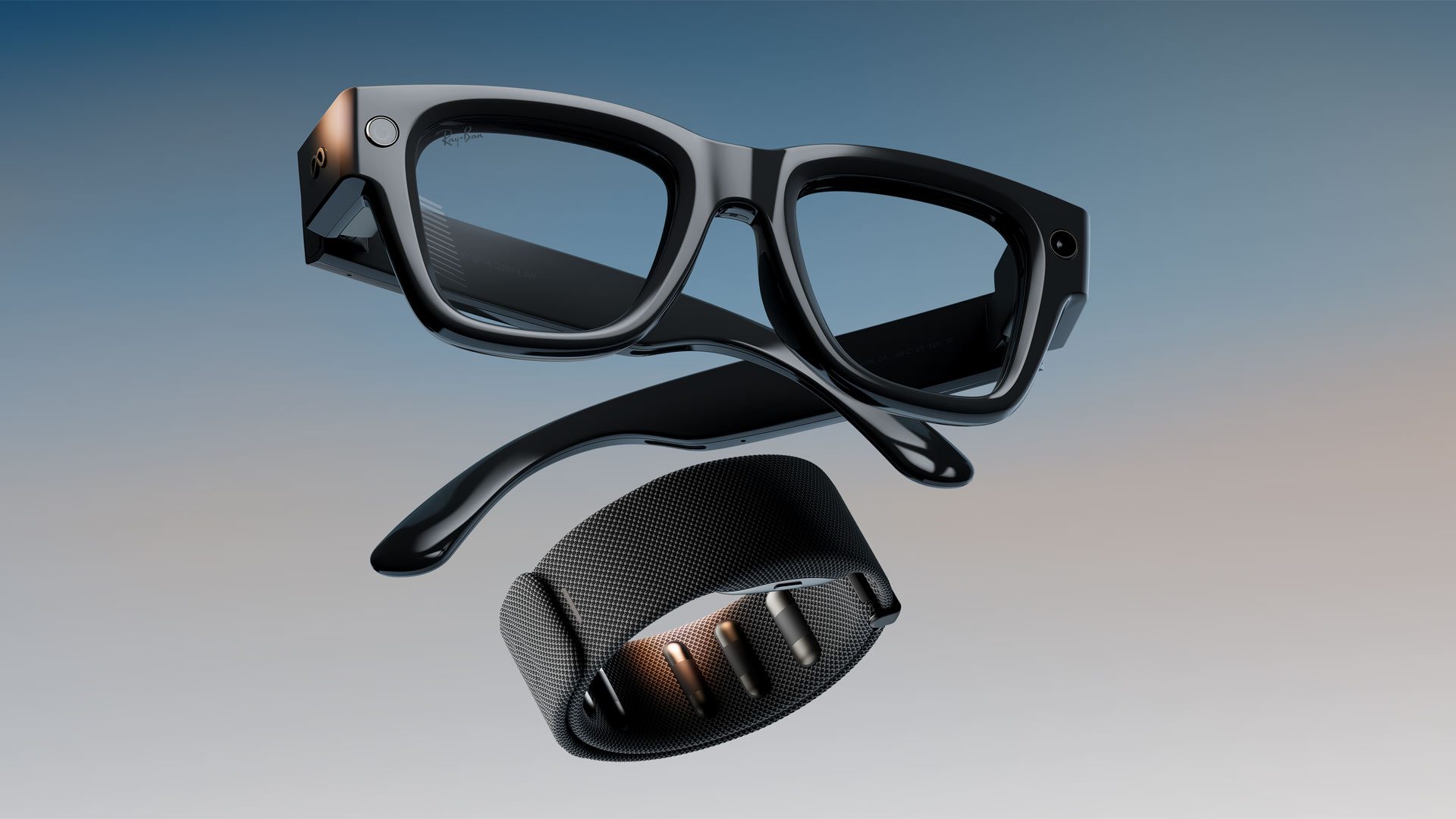
Meta Ray-Ban Display Glasses & Neural Band | Image courtesy Meta

But it probably won’t always be that way. Meta seems to be leveraging what it can feasibly (and cheaply) do right now without having to cut any expensive licensing deals with dominant players in the smart watch segment.

The company does have a vector to get all of that data one day though. Meta Ray-Ban Display comes with a wrist-worn Neural Band controller that uses surface electromyography (sEMG) which lets users quietly write out messages and manipulate UI. I can imagine a near future where Neural Band has a packet of sensors similar to a smart watch, albeit without the display.

Provided Meta goes that specific route, the company wouldn’t need to integrate with existing health ecosystems at all for its future smart glasses. It will already have everything it needs to close the loop on what you’re eating and how you’re burning it off.

This article may contain affiliate links. If you click an affiliate link and buy a product we may receive a small commission which helps support the publication. See here for more information.

Well before the first modern XR products hit the market, Scott recognized the potential of the technology and set out to understand and document its growth. He has been professionally reporting on the space for nearly a decade as Editor at Road to VR, authoring more than 4,000 articles on the topic. Scott brings that seasoned insight to his reporting from major industry events across the globe.
  • Christian Schildwaechter

    TL;DR: AI driven food documentation with recommendations not based on actually measured biomarkers from the company that massively worsened teen mental health with artificially created unrealistic beauty standards on Instagram, and which makes 98% of its money from ads, sounds like a bad idea.

    The intend may actually be good, and they are limited by only having the cameras to get any health information, but this raises a lot of red flags. The most obvious is them gathering infos about eating habits that can be very easily abused to find people that can be targeted with ads for things like supplements, a lot of which are very expensive nonsense physicians/nutritions advice against, but still sell tons online because their sale is less restricted than medication.

    Secondly Meta already got into trouble for pushing unrealistic expectations on Instagram with both having teens fishing for likes and then adding filters for unrealistic beauty standards. There is already a very bad connection between Meta and eating disorders, and letting them track eating habits may make it worse. Sure, someone could use these food logs to add more lentils and legumes, but again physicians usually dislike people counting calories, because this is rarely about developing a healthy relationship with food, and more often used to control calorie intake, not necessarily in a healthy way.

    While other smart devices like the Apple Watch measure real biomarkers and can actually warn you about heart arythmia, so you should seek a doctor, the Meta glasses will only be able to document what you eat and then make recommendations without any actual feedback about how healthy you were before or after taking up these recommendations. So the usefulness is very limited to begin with, while the danger of driving people into very unhealthy eating control habits plus questionable sublement purchases based on recommendations about missing nutrients is huge. Instagram will set the unhealthy goals, and Meta Ray-Ban food logs will help you with chasing them, with food related products advertised to you on Facebook based on what you ate.

    • If you want to see a real Aprils fools, you have to check out my blog lol

  • I already thought about a similar use case in the past, and I was expecting some startups working on it. If it is Meta offering it out of the box, it means no company will be able to work on it, which is not that good for the ecosystem.