
Pico to Showcase VisionOS and Android XR Competitor at GDC Next Month

3

Pico announced that it’s showcasing the core OS and platform capabilities of its upcoming XR headset ‘Project Swan’ at next month’s Game Developers Conference (GDC).

The News

Project Swan is going to be Pico’s next flagship XR headset, the company says in its GDC session description, which is also slated to run PICO OS 6, the next version of the company’s Android-based operating system.

While the company hasn’t expressly said it will also reveal Project Swan’s hardware at GDC in March, Pico says it will provide “an overview of Project Swan’s graphics performance, multimodal interaction system, and developer toolchain, as well as practical guidance on bringing existing apps or games into spatial computing workflows,” which is set to include “concrete examples and live demos.”
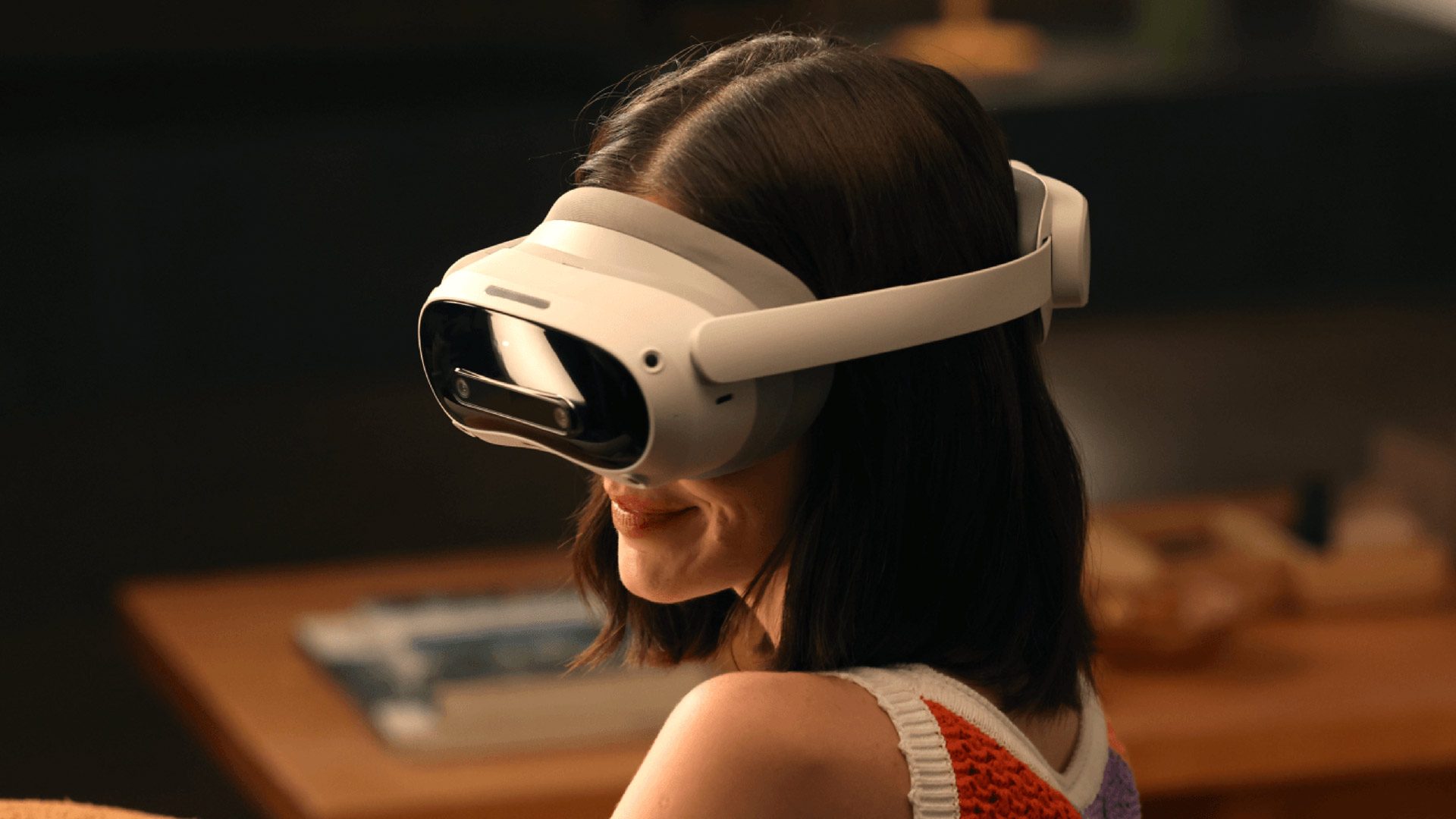
Pico 4 Ultra | Image courtesy Pico Interactive

“This session introduces the core OS and platform capabilities that enable developers—from XR specialists to non-XR app, web, and game creators—to build or adapt content for this emerging medium,” Pico says. “It presents a new paradigm for spatial experiences in which games and apps coexist, allowing a primary experience to run alongside companion applications in a shared environment.”

The Information initially reported last summer that Project Swan is set to be a slim and light headset weighing in at around 100 grams, which allegedly features a hybrid design that offloads processing to a tethered compute puck. Other reported features include hand and eye-tracking for input.

Then, in November 2025, Zhenyuan Yang, Vice President of Technology at Pico parent company ByteDance, revealed the headset will house a self-developed chip with a custom microOLED display, the latter of which is said to approach 4,000 PPI—slightly higher than that of Apple Vision Pro’s 3,386 PPI.

Furthermore, Yang said Pico’s microOLED displays reach an average 40 PPD (over 45 at center), and addresses brightness limitations by incorporating microlens (MLA) technology and optical compensation for uniform color and luminance.

We expect to learn more at GDC next month, which takes place March 9th – 13th at the Moscone Center in San Francisco, California.

SEE ALSO
Apple Design Lead Heads to Meta, Hopefully to Fix Longstanding Quest UX Issues

My Take

Project Swan is slated to mark a significant next step for the company. Pico’s parent company ByteDance ostensibly isn’t throwing money at its XR division like it was before though, so it’s a new game.

Battle lines have shifted since Pico first launched its Pico 4 series headsets in 2022 though. Back then, Pico was nipping at Meta at its peripheral territories in East Asia and Europe, relying on its unique access to the Chinese market, and leaning heavily into enterprise. It also released Pico 4 Ultra in 2024, a direct competitor to Quest 3.

That same year, Apple released Vision Pro, priced at $3,500. A year later, it followed up with an M5-based hardware refresh at the same price point, while Google formally launched Android XR alongside Samsung’s Galaxy XR headset, priced at $1,800—moves that effectively reframed the competitive landscape.

Rather than racing to the bottom, companies are increasingly targeting the high end, as early expectations around mass-market consumer adoption seemed to have faltered, with Meta’s recent pullback from funding first-party Quest content possibly signaling a broader shift in how the industry approaches the consumer XR segment.

That said, I’d expect Project Swan to straddle the prosumer-enterprise segment, as the company’s next flagship probably won’t be cheap enough to make any grand overtures to consumers while simultaneously offering the very same consumer-oriented platform Pico built up over the years, which hosts a wide array of XR games and apps.

To me, this increasingly puts Pico more in competition with visionOS and Android XR, rather than as a direct competitor to Horizon OS. That said, Meta’s upcoming headset could possibly arrive next year, which is reportedly also a slim and light headset tethered to a compute puck, which may put all four—Apple, Google, Meta and Pico—in the same boat.

This article may contain affiliate links. If you click an affiliate link and buy a product we may receive a small commission which helps support the publication. See here for more information.

Well before the first modern XR products hit the market, Scott recognized the potential of the technology and set out to understand and document its growth. He has been professionally reporting on the space for nearly a decade as Editor at Road to VR, authoring more than 4,000 articles on the topic. Scott brings that seasoned insight to his reporting from major industry events across the globe.
  • zaelu

    go go yey I guess

  • Christian Schildwaechter

    TL;DR: The hardware is the less interesting part, the real problem will be getting devs to support PICO OS 6 features going beyond OpenXR. Ideally they'd cooperate with Meta, Qualcomm, Goertek and others on productivity focused HMDs to get a fighting chance against Apple and Google with their large existing flat app libraries and user bases.

    In early consumer VR, each headset came with its own SDK/software development kit. Oculus, HTC/Valve, Google and others like Razer's OSVR all featured very similar, but not compatible ways to get tracking information and render a stereoscopic image, making it harder for developers to release cross platform titles. This was partly due to the technology being too new for standards to be established, and partly a way to lock out competitors, for example preventing Oculus exclusive titles to run on Vive or Index (until you installed the FOSS Revive compatibility layer).

    Game engines like Unity countered that by introducing abstraction layers that translated their own XR functions to the separate vendor SDKs, making it easier to release cross-platform games. But overall the lacking compatibility backfired when VR turned out to be a rather small market that didn't draw lots of developers, so making it harder for devs only led to even less interest. Enter OpenXR, a cross-platform standard introduced in 2019 by the Khronos Group, created in partnership with all the major players, and providing a mechanism to seamlessly migrate existing SDKs and add not yet standardized functions like eye tracking via extensions.

    By now pretty much everybody has switched to OpenXR, and thanks to the Monado project there are now even OpenXR drivers for Cardboard viewers. And with most standalone HMDs running Android on ARM processors, OpenXR APKs can even run on different platforms, allowing to sideload for example the same Valve's Steam Link binary to the Play for Dream or Galaxy XR, or run Android VR games on Steam Frame with the Lepton compatibility layer.

    This was extremely important for smaller vendors that never gathered enough users to justify developing for their HMDs. And it was the main driver for how Pico managed to get a respectable game library despite selling in much lower numbers than Quest overall, and not at all in the US. Thanks to OpenXR, game developers had to invest very little effort to get their Quest games to also run on Pico, and a lot of them did to increase their rather small target group.

    This worked great for games, as OpenXR mostly defines the interaction with XR/VR hardware specific parts, leaving most of the rendering to the base OS and its graphics libraries like OpenGL, DX12 or Vulkan, which again where "hidden" away by game engines. But it no longer works for applications beyond games that have to integrate with existing flat apps, as we expect higher priced productivity HMDs to do. AVP, GXR, Meta's expected Phoenix HMD and Pico's Project Swan all target a higher price and not (only) gaming use. And there is no comparable standard yet how to support flat apps in XR.

    Apple provided their own SDKs for adding XR to iOS apps, Google's AndroidXR offers similar functions, but made them proprietary, so other companies like Meta or Pico that based their OS on the open source version of Android cannot use them. Meta has released their own Spatial SDK, Pico would have to do something similar, as would Play for Dream or any other provider. And as there is a rather rich infrastructure for building flat apps, this is a lot more complex than handling 6DoF tracking and stereoscopic rendering.

    So we are basically back to the beginning, with incompatible solutions requiring devs to do the same work multiple times for different platforms in a rather small market. Apple and Google can rely on millions of active iOS or Android developers, and lots of existing flat apps that already run on their HMDs by default, and can be gradually extended with additional XR features for a smooth transitions. Meta lacking access to a flat Android store always had a problems here, despite trying to lure Android devs with offers like funding through their Lifestyle App Accelerator. Pico may actually have less of a problem here due to their main market being China, where the Google Playstore isn't available, and Android users are used to getting their apps from 3rd party stores. But both will seriously struggle to compete with the existing duopoly that now leverages their existing large user, app and developer bases.

    IMHO their best option would be to create a free, cross-platform SDK that replicates the flat app integration parts of visionOS or AndroidXR, leaving out all the extra parts like Apple's integration into their services like Facetime, or the heavy reliance on Google's Gemini AI as seen on GXR. Meta and Pico and others each coming up with another incompatible approach won't fly, as there aren't ubiquitous development tools like Unity for games that could cover up the differences.

    I was kind of hoping for Qualcomm and Goertek to release something like that, as these two provide the basic technology for and build most of the available HMDs, also providing a complete Android based XR OS with matching OpenXR stack. If they want to continue to sell to lots of vendors, they need to come up with solution for productivity apps too. Simply because not all of their customers will be either willing (Meta/Pico) or able (everyone in China) to adopt AndroidXR. And even some both willing and able to release an AndroidXR HMD like Lynx got "uninvited" by Google for reasons unknown.

    Pico was originally founded out of Goertek, so they should still be closely connected. Goertek also produces all Quest HMDs, and Meta said they'd shift more of the HMD component design towards Goertek to lower cost. And Meta is still in a multi-year strategic partnership with Qualcomm for XR SoCs. So ideally all of them get together and release a common Spatial SDK that is also open to third parties, providing an alternative to the closed sourced visionOS and AndroidXR that funnel all software revenue to either Apple or Google. Even if they do, it will still be hard to compete in a productivity HMD market against the content dominance of the current big players, but at least not as futile as everybody trying on their own.

  • Christian Schildwaechter

    Trio? youtu_be/lNYcviXK4rg