
TCL Shows Off New High PPI OLED and Micro-LED Displays for XR

11

TCL has revealed its latest OLED and micro-LED displays aimed at AR and VR headsets. The company claims to have achieved new benchmarks for pixel density.

Shown off at the SID Display Week event, TCL’s new 2.24-inch display is claimed to be the “highest pixel density real RGB G-OLED display,” at 1,700 PPI (pixels per-inch), for a total resolution of 7.2MP (2,600 × 2,784) and refresh rate of 120Hz.
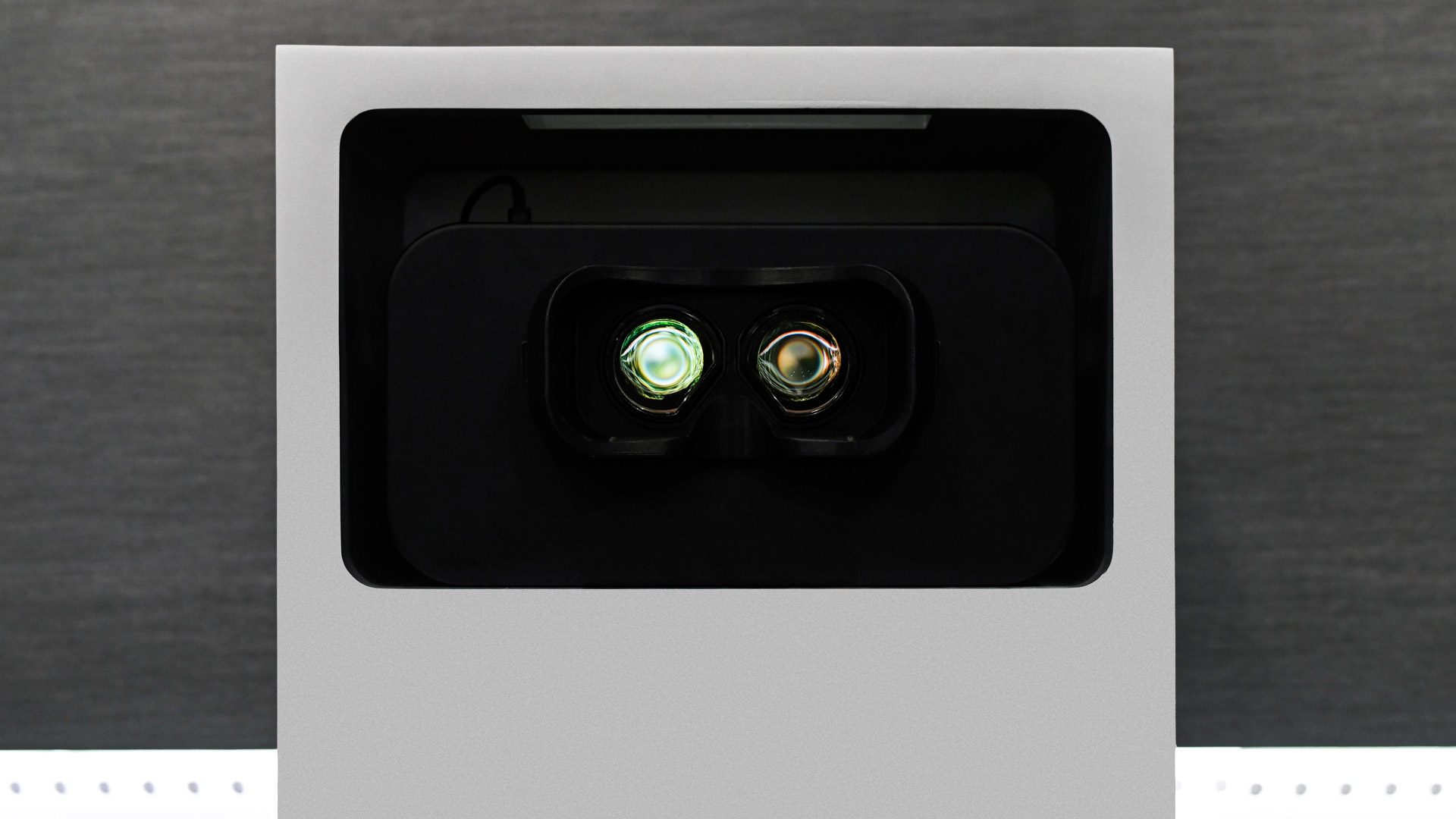
A pair of TCL’s G-OLED displays shown in a demo box with lenses | Image courtesy TCL

While there are OLED displays out there with higher PPI, TCL claims it’s got the highest PPI among glass-based OLED displays that use a “real RGB” subpixel layout. We take that to mean that the display is using an RGB stripe layout where every pixel has an equally sized red, green, and blue subpixel. That comes in contrast to many OLED displays that use different subpixel counts, sizes, and patterns (which can impact image quality).

At 2.24-inches, this display is best suited for VR and MR headsets in the same size-class that we know today.

For more compact devices, you need a much smaller display. That’s where TCL’s new micro-LED display comes in.
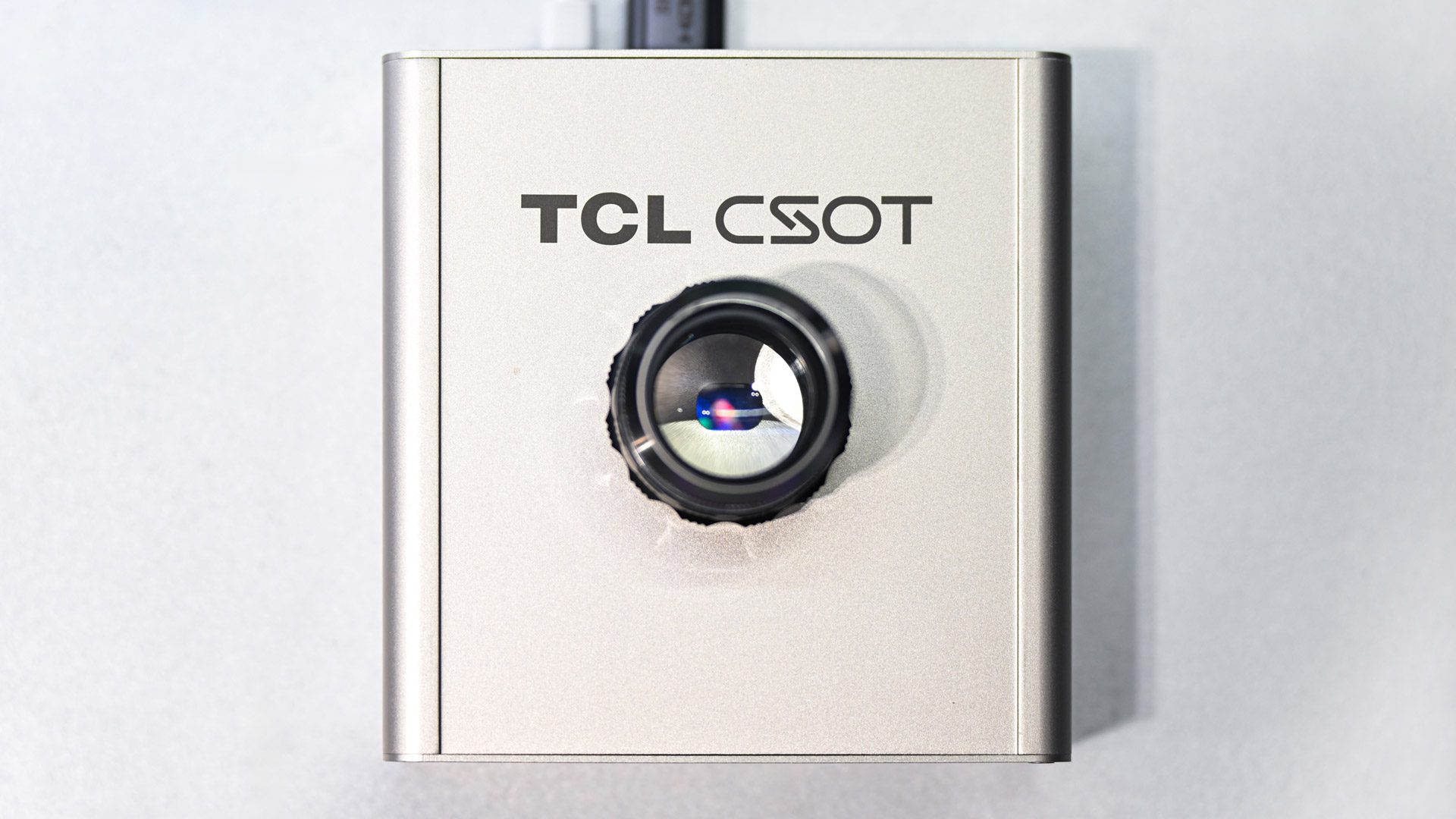
Image courtesy TCL

In a footprint of just 0.28-inches, TCL has crammed a PPI of 5,131. While not suitable for wide field-of-view devices, this could easily be retina-resolution if employed in a small field-of-view (like in the smartglasses use-case).

That seems to be where TCL is aiming at with this display; micro-LED is self-emissive and can be very bright, making it a good candidate for smartglasses which need displays with high brightness to combat daylight environments.

TCL is claiming this display is the “highest PPI single-chip full-color silicon micro-LED display.” The resolution is 0.9MP (1,280 × 720), which might not sound like much, but for comparison Meta’s current Ray-Ban Display glasses have a 0.36MP (600 × 600) resolution which is less than half of the total pixels of this new display from TCL.

SEE ALSO
VR Pioneer nDreams Announces Studio Closures & Layoffs Amid "challenging" Games Market

Whether these new displays make a big splash on the market depends not just on their specs but also on their costs, reliability, and a handful of other factors of which we don’t have clear details just yet.

This article may contain affiliate links. If you click an affiliate link and buy a product we may receive a small commission which helps support the publication. See here for more information.

Ben is the world's most senior professional analyst solely dedicated to the XR industry, having founded Road to VR in 2011—a year before the Oculus Kickstarter sparked a resurgence that led to the modern XR landscape. He has authored more than 3,000 articles chronicling the evolution of the XR industry over more than a decade. With that unique perspective, Ben has been consistently recognized as one of the most influential voices in XR, giving keynotes and joining panel and podcast discussions at key industry events. He is a self-described "journalist and analyst, not evangelist."
  • Albert

    Clearly, Micro-Oled has a higher PPI and total pixel count than the 2.24-inch display. Is the selling poinit of this chip that it will be lower cost?

  • eadVrim

    LCD displays on VR headsets were a huge mistake that ruined VR. No immersion, no wow effect, nothing.

    • Foreign Devil

      I've never tried an OLED VR headset. . . But the claims about OLED vs.. LCD seem a bit exaggerated. .

      • eadVrim

        VR displays need true black levels so the headset image can blend naturally with the rest of the human field of view in dark scenes. LCD panels were one of the biggest immersion breakers in VR because grayish blacks make the edges of the display and the limited FoV much more noticeable.
        True blacks also make object contrast look more natural, while the rest of the colors appear far more vivid and lifelike. The result is a much immersive, and a good “wow” effect.

        • Christian Schildwaechter

          There is no such thing as true black levels unless you have a perfect seal that prevents any light bleeding. With most regular HMDs, there is always some faint light that creep, and even black paint reflects 5-10% of the light, making it actually dark gray. You have to go for special colors like Vanta black, used to cover the insides of telescopes, to get to really dark levels of more than 99% absorption.

          OLED being able to completely switch off pixels allows for "no emitted light", but that still leaves "reflected light" from the smooth display surface. Unless you use a Bigscreen Beyond with a facial pad custom fitted to your particular bone structure via a 3D scan you can only get dark gray out of any OLED display, but admittedly darker gray than from any LCD with a uniform white backlight.

          LCD with small LED dimming zones can match the contrast of OLED for large enough areas simply because they also can turn off the emission completely, instead of only filtering out the backlight, while still benefitting from the much higher overall brightness of LCD, with high brightness also required for achieving a high dynamic range.

          The rather low max brightness of microOLEDs of a few hundred nits is one of the main reasons why Bigscreen came up with the customized interface, as without it the display wouldn't look as high contrast due to light creep. You need 1000 nits displays to read a display outside, high end iPads using two sandwiched OLED panels get up to 1600 nits for HDR content, and Meta showed experimental HMDs with up to 10,000 nits that looked like really being outside. Just insisting on "true black" (emission-less dark gray) ignores large parts of what high contrast actually requires, which has to include ambient light reflection and peak brightness.

    • XRC

      Would have to disagree, in that current LCD technology is very impressive.

      have QLED displays in three headsets, 2.8k and 3.8k resolution both with local dimming (software controlled on 2.8k and hardware controlled on 3.8k)

      also have micro-OLED (Sony) 3.5k displays in another headset

      so it's very easy to compare, playing the same games

      You would assume the micro-OLED is better in every respect but the QLED panels are considerably larger allowing for a more substantial field of view, also much brighter and boasting rich colours and very good black levels, whilst offering 120hz, the micro-OLED support up to 90hz

      due to pancake lenses used in my micro-OLED there are ghosting artifacts, these are more noticeable than the limited degree of local blooming from the active backlighting on the QLED headsets

      QLED is a long way from the grey soup of the Quest 3 and Index with their simple LCD panels

      perhaps once the micro-OLED panels become larger and brighter they will provide a similar experience to the QLED but currently in terms of immersion the larger field of view and brighter display actually feels much more immersive

  • eadVrim

    You don’t need to be a genius to know what you like and enjoy seeing with your eyes.

    • NL_VR

      No everyone have right to their opinions. To you LCD can ruin VR and then its lucky for you there is OLED and MicroOled options for you so you are set to go.
      Your personal opinion is not facts.

      • eadVrim

        I did fortunately, and my opinion is also to newcomers in VR who have never experienced VR OLED before, and who have the right to compare and decide.

        • NL_VR

          i had both and i wouldnt say LCD ruins VR. Its as any screen with LCD.
          Everything has pros and cons, its not like the OLED screen in a PSVR2 for example is flawless, far from it.
          New micro oled headset might be the perfect but its still verry expensive. not sure many are prepared to buy such expensive headsets but wait instead until price goes down on micro oled.

        • Christian Schildwaechter

          As OLED panels and pancakes currently exclude each other due to the low brightness of the panels, your advise to newcomers is at best questionable. A lot of people experienced with VR would pick pancakes plus LCD over OLED panels plus Fresnel for the added clarity, and it is very unlikely that newcomers would jump right in with one of the still very expensive HMDs using microOLED displays in combination with pancake lenses.

          If you really wanted to help newcomers, you should also mention that pretty much all affordable standalone HMDs released this decade use LCD displays, and that these make up most of the current VR market. And that the Valve Index as the for a long time best overall VR HMD used LCD, with Valve picking LCD again on the upcoming Frame esp. because LCD can be much brighter than OLED. So what you first stated like a universal truth, and then softened to just your personal opinion to guide those that might not know, is really not any proper evaluation of what is actually successful in VR.

          There is a (very noisy) minority that considers the contrast of OLED to be essential for a good experience, but that neither reflects what any of the larger VR companies concluded, nor what the vast fast majority of the market decided with their wallets for. And these include a lot of people who actually have experienced OLED panels, usually agree that the contrast is better, but not necessarily worth it with other downsides like worse lenses, mura etc.. And the device most successfully going after newcomers, the Quest 3S, combines both LCD display and Fresnel lenses to lower the price, which apparently is more important for people new to VR.

          So maybe your advice should come with a disclaimer that it is only targeted at those willing to spend USD 2K+ for a microOLED standalone, USD 1K+ for a tethered HMD, or those who don't care about image clarity or resolutions significantly above 1.5K, where the Fresnel lenses become more of a limiting factor than the display resolution itself.