
XR Year in Review: The Most Important Stories of 2025 and What They Mean for 2026

7

The launch of Android XR, a newly announced headset from Valve, and major strategic shifts at Meta, are just the start of what made 2025 a significant year for the XR industry at large. 2026 will mark the 15th year that we’ve been following this XR journey here at Road to VR. With the context that comes with that long-term perspective, it’s once again time to reflect on the biggest stories of the last year and to talk about what’s on the horizon.

Meta Makes Aggressive Cuts as It Shifts XR Strategy
Image courtesy Meta

In early 2025, Meta CTO Andrew Bosworth issued a memo calling it a ‘make or break’ year for the company’s XR ambitions.

“This year likely determines whether this entire [XR] effort will go down as the work of visionaries or a legendary misadventure,” Bosworth wrote.

Well, by early 2026 it’s looking like “legendary misadventure” takes the cake.

Apparently not seeing the growth and traction it wanted, Meta is making an aggressive shift in its XR strategy. The last few days have seen reports of multiple first-party VR studios being cut down to size or outright shuttered. The company’s business-focused virtual collaboration space, Horizon Workrooms, is being shut down, and more. In total, the company is said to be cutting roughly 10% of its entire Reality Labs division as it shifts focus away from VR and “metaverse” efforts.

What it Means for 2026

It’s going to take a while for the dust to settle on this, and it probably won’t be until Q2 that the company shares a clear vision for what it hopes to accomplish with the cuts and new direction.

From what I’m seeing and hearing, it sounds like Meta isn’t exiting the XR space, but it’s shifting focus more strongly toward the glasses end of the spectrum, while doing away with the notion that building a “metaverse” (a digital space where people would gather, play, and work) is a strategic imperative.

Rather, it looks like Meta will continue to run its XR headset platform and let it evolve naturally rather than trying to place big content bets or force the metaverse into existence. Meanwhile, the company is said to be focused on boosting production of its smart glasses to serve growing demand.

Although that likely means a greater focus on smart glasses and AI assistants for the time being, it’s clear that the company’s end-goal is (and has been) to evolve its smart glasses into full-blown augmented reality glasses over time. In fact, Meta showed an early vision of this end goal back in 2024 with the Orion prototype. The 2025 release of the Ray-Ban Display glasses, and the ‘neural band’, was a clear step toward that goal.

Ray-Ban Display is still just a pair of smart glasses (ie: a small field-of-view and a static display with no tracking). But already the company that makes the waveguide in Meta’s glasses says it has a much larger 70° field-of-view waveguide that’s ready for production.

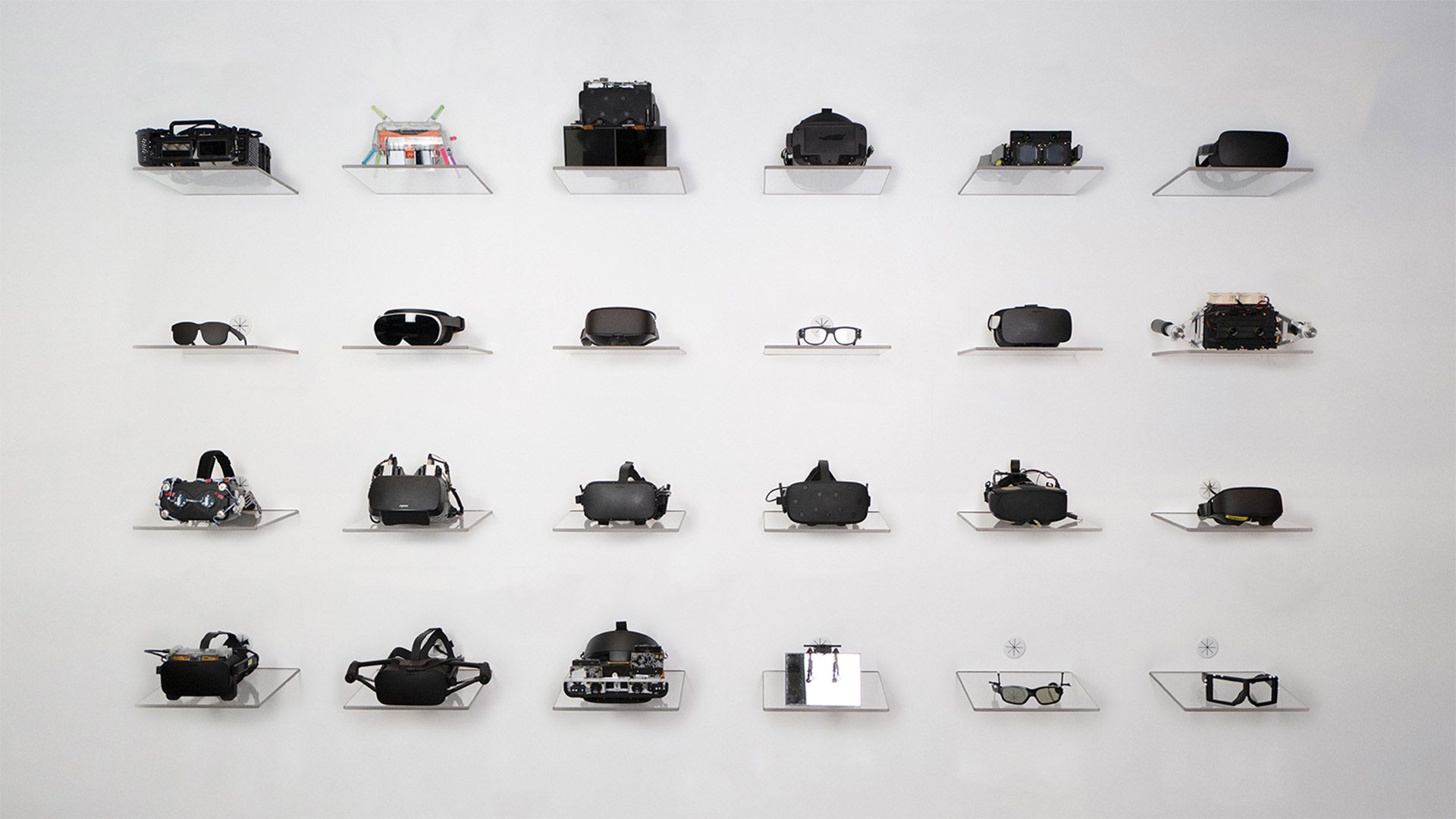
For many years I’ve explained that the industry has been working on the challenge of compact and affordable XR devices from two sides. On one hand, the industry has started by packing a wishlist of features into a bulky headset, and then trying to make it smaller. On the other hand, the industry is starting a tiny glasses-like package, and then trying to add back all the features enjoyed by the bulkier headsets.

Meta has mostly focused on the former (headsets), but it’s now shifting focus to the latter (glasses). The end goal, however, remains the same: an affordable and comfortable device that can digitally alter the world around you.

This big shift isn’t just a big deal for Meta, it’s a big deal for the whole industry. Meta has been dominant in the space for years, thanks in a big part to being able to out-price the competition and attract developers, thus building the leading standalone headset platform. With its standing in the industry, Meta has been able to direct much of what has happened within the industry, either explicitly or implicitly.

If Meta is pulling back on its VR and metaverse initiatives, the door may open for another company to take over its influential role. Or, the space might settle into a new equilibrium with a renewed competitive landscape, which has long been suffocated by Meta.

All we can say for certain is that 2026 will be a year of major realignment as the industry figures out how hands-on Meta plans to be with its VR platform going forward.

The Biggest Year in Recent History for XR Hardware
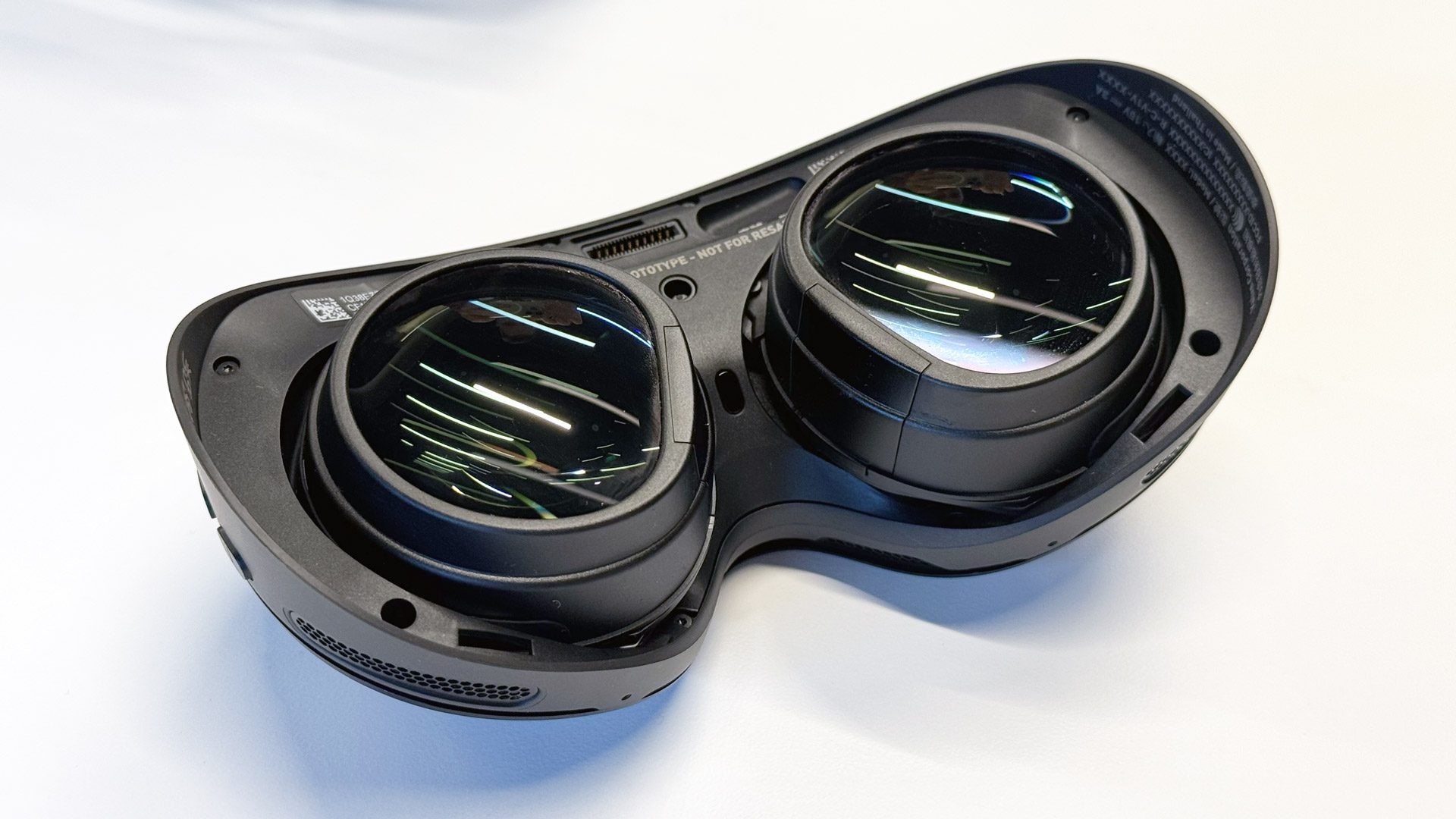
Photo by Road to VR

2025 turned out to be a huge year for XR hardware launches and announcements.

Google finally revealed and launched Android XR, a direct competitor to Apple’s VisionOS. Samsung launched the first Android XR headset, Galaxy XR, a direct competitor to Apple’s Vision Pro.

Apple also launched a new version of Vision Pro with an upgraded processor and (finally) an improved headstrap. And after years of rumors and speculation, Valve announced Steam Frame, its second-ever VR headset.

In parallel, we’re also seeing the rapid heating up of the smart glasses and AR glasses space.

Meta launched updated versions of its smart glasses, including Ray-Ban Display, its first smart glasses with a display. XREAL previewed Aura, which is set to launch in 2026 as the first AR headset running Android XR. The company subsequently raised $100 million in new funding as it announced an extended partnership with Google. VITURE, a company with similar approach to smart glasses and AR glasses, also raised $100 million in 2025.

What it Means for 2026

Although they happened in the same year, all of these announcements represent the culmination of investments and development that happened over the last several years. With three major tech titans making XR plays (Meta, Apple, and Google), 2026 is shaping up to see a level of competition that truly hasn’t been seen yet since I started reporting on the industry back in 2011.

Meanwhile, Valve is taking a whole new approach to its VR architecture. Frame is a fully standalone headset—a first for Valve—and the company has designed it to be a better companion to people’s existing Steam library, by allowing it to play pretty much any Steam game (VR or otherwise) either locally or streamed from a nearby PC.

While Valve is giving PC VR some much needed love, I’m still not convinced that Frame is going to revolutionize the space. Although it has some neat extras (like improved wireless game streaming thanks to eye-tracked optimizations), it doesn’t really do that much more than a Quest 3 or Quest 3S, which will inevitably be the cheaper options. As with its prior headset, Frame will probably remain limited to an enthusiastic niche of hardcore PC VR players. But ultimately, Frame shows that Valve never stopped caring about VR and that the company is still focused on making Steam an open VR platform on PC that will be maintained for years to come.

Meta has been hard at work prototyping full-blown AR glasses, but it hasn’t actually launched such a product yet. Meanwhile, Xreal and Viture have been rapidly evolving their smart glasses with growing AR capabilities, seemingly catching companies like Meta by surprise. The pair of $100 million investments into Xreal and Viture (and especially Xreal’s close partnership with Google) will put pressure on Meta to release its AR glasses sooner rather than later.

Valve Reveals a New Headset, But Confirms No New First-party VR Game to Go With it
Image courtesy Valve

Given that Valve launched Half-Life: Alyx back in 2020 to show what was possible with its first VR headset, there was widespread speculation that the company would similarly announce a new VR game to launch alongside Steam Frame. But as the company told me directly, there is no new first-party VR game in development.

What it Means for 2026

The lack of a flagship launch title to go out the door with Steam Frame has left many scratching their heads. New headsets are exciting, but given the dearth of exciting PC VR content in the last few years, what are people actually going to play… more Beat Saber?

I’m glad Valve is still in on VR, but I’m not exactly bullish on Frame. Luckily the PC VR landscape has never had more options to serve various hardcore PC VR niches, thanks to companies like Pimax, Bigscreen, and Shiftall—and hey, even Sony technically makes a PC VR headset!

A Shifting VR Player Demographic Comes to a Head as Veteran VR Studios Struggle to Stay Afloat

Created using images courtesy Meta

2025 was a brutal year for established VR studios. Highly immersive single-player apps were once the bread and butter of VR gaming. But VR was not insulated from the broader gaming industry shift toward free-to-play multiplayer games.

That shift seems to have reached a peak just as a wave of prior long-term bets on single-player VR content was coming to fruition in 2025. The result has been report after report of established VR studios struggling to stay afloat.

Among studios seeing underwhelming revenue, staff cuts, or outright closures this year was Cloudhead Games, Fast Travels Games, Soul Assembly, Vertigo Games, Toast Interactive, nDreams, and Phaser Lock. Not to mention Meta shuttering several of its first-party VR game studios that were focused on single-player content.

On the other hand, new studios focused on free-to-play multiplayer content have seen rapid growth and seemingly reached unprecedented new peaks of player counts and retention. Games like Gorilla Tag, Animal Company, Yeeps, and UG are dominating Quest’s Top Selling Charts by serving a younger demographic of players looking for free-to-play multiplayer experiences. Interestingly, all four of these newer top-earning titles are also built around arm-based locomotion.

What it Means for 2026

Whether we like it or not, free-to-play multiplayer is here to stay. Many of the most popular non-VR games are free-to-play multiplayer games, so it should be no surprise that the same formula would take over VR as well. The unfortunate part is that the transition happened so fast that by the time the latest wave of big budget single-player VR games landed, they were launched into a void of demand. With production times of some bigger VR games spanning 1-3 years, it’s difficult to course-correct.

Especially with Meta’s latest cluster of studio closures, the message is now unambiguous: premium single-player VR games are no longer what the bulk of active VR users are looking for. That’s not to say there’s no room for great single-player experiences in VR, but the demand for them isn’t what it used to be.

Of the veteran VR studios that have managed to weather the storm, I expect to see many of them take their first stab at free-to-play multiplayer VR games, or focus on ‘VR optional’ titles, or even leave VR for the time being while they seek greater stability in the larger gaming market.

Frankly, I think this situation has a bit less to do with the ‘free-to-play’ part, and more to do with the ‘multiplayer’ part. As with almost every entertainment activity in existence, most people like to play games with their friends. The rise of massively successful paid multiplayer games with structures that are reminiscent of traditional single-player games (ie: DestinyValheimHelldivers, Arc Raiders) tells me that pure single-player games as a whole will one day become a thing of the past.

That’s not to say that we won’t see great, ‘single-player style’ games still made (like, say, Red Dead Redemption 3) but I bet you’ll at least have the option to play them with a friend or two.

Vision Pro First Generation Pathfinding
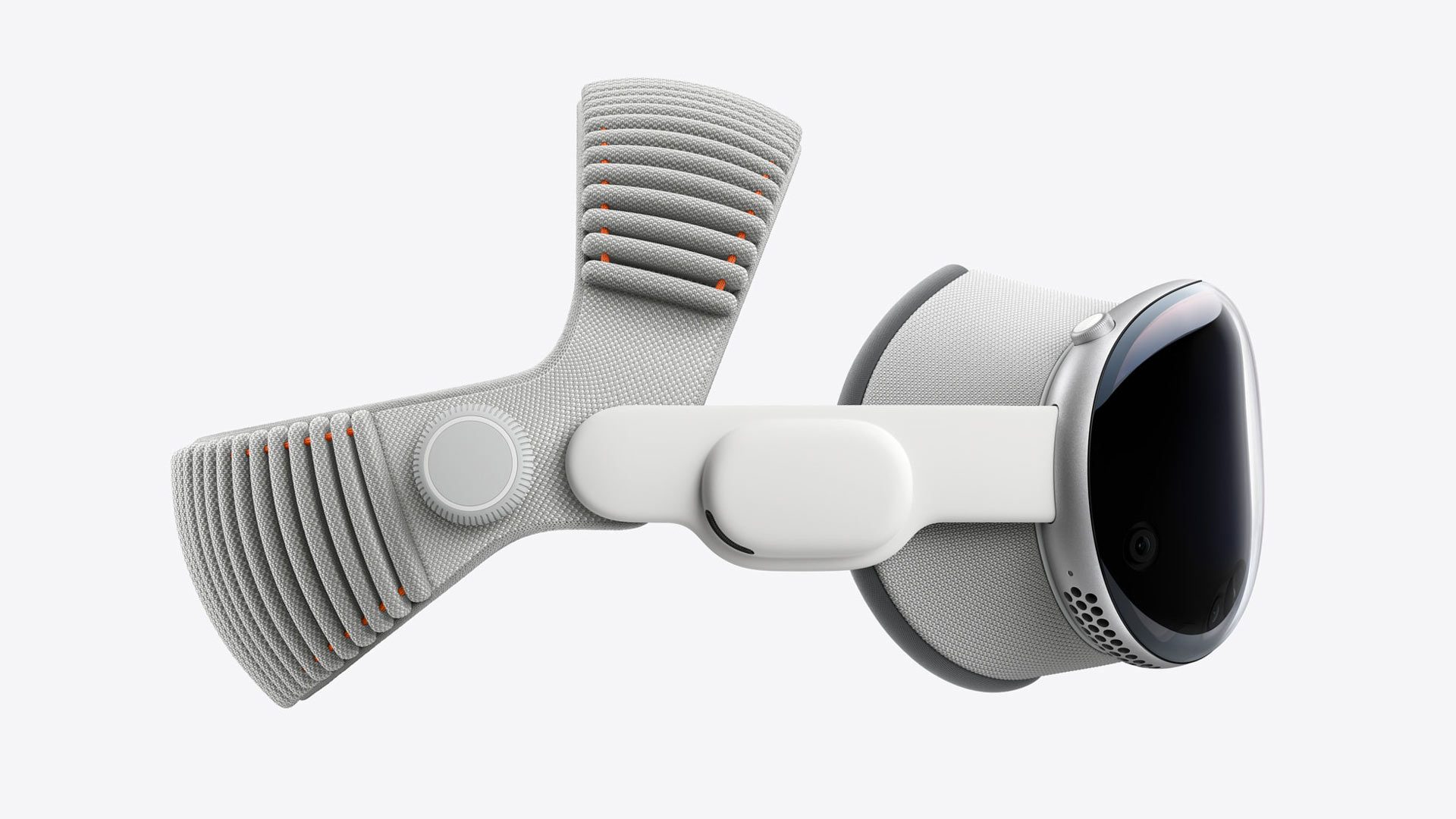
Apple Vision Pro (M5) | Image courtesy Apple

2025 was the year that we saw Apple working to fix first-generation product issues with Vision Pro. That included adding official support for PSVR 2 Motion Controllers and a Logitech stylus, several major new features included in the launch of VisionOS 26, and a refresh of the headset with a more powerful M5 processor and a better headstrap.

What it Means for 2026

These changes were all clearly meant to address first-generation pain points. Specifically, the improved headstrap was a major admission that the headset was too heavy and bulky. Unfortunately a better head strap can only do so much.

I don’t expect we’ll see any new XR hardware from Apple in 2026. But I do expect to see the company continue to make more of these first-generation fixes and to further improve the headset’s most promising use-cases on the software side. I’m still personally hoping for better window management.

While there’s been much reporting about Vision Pro as a ‘failed’ product, those that are actually connected to the XR industry understand that Vision Pro is a significant contribution to the state-of-the-art that’s really only held back by its current size and weight. I’m certain Apple knows this too.

My bet is that Apple is far from done with Vision Pro and VisionOS. It’s rare for the company to make a product play only to cancel it after one generation. More likely, I’m willing to bet that Apple has set new and specific goals for the size and weight of its next Vision headset, and will happily wait for years until it can actually meet those goals. In the meantime, it will continue to invest in VisionOS, which I’ve long said is a more important contribution to the industry than the headset hardware itself.

2025’s “WTF” Moment
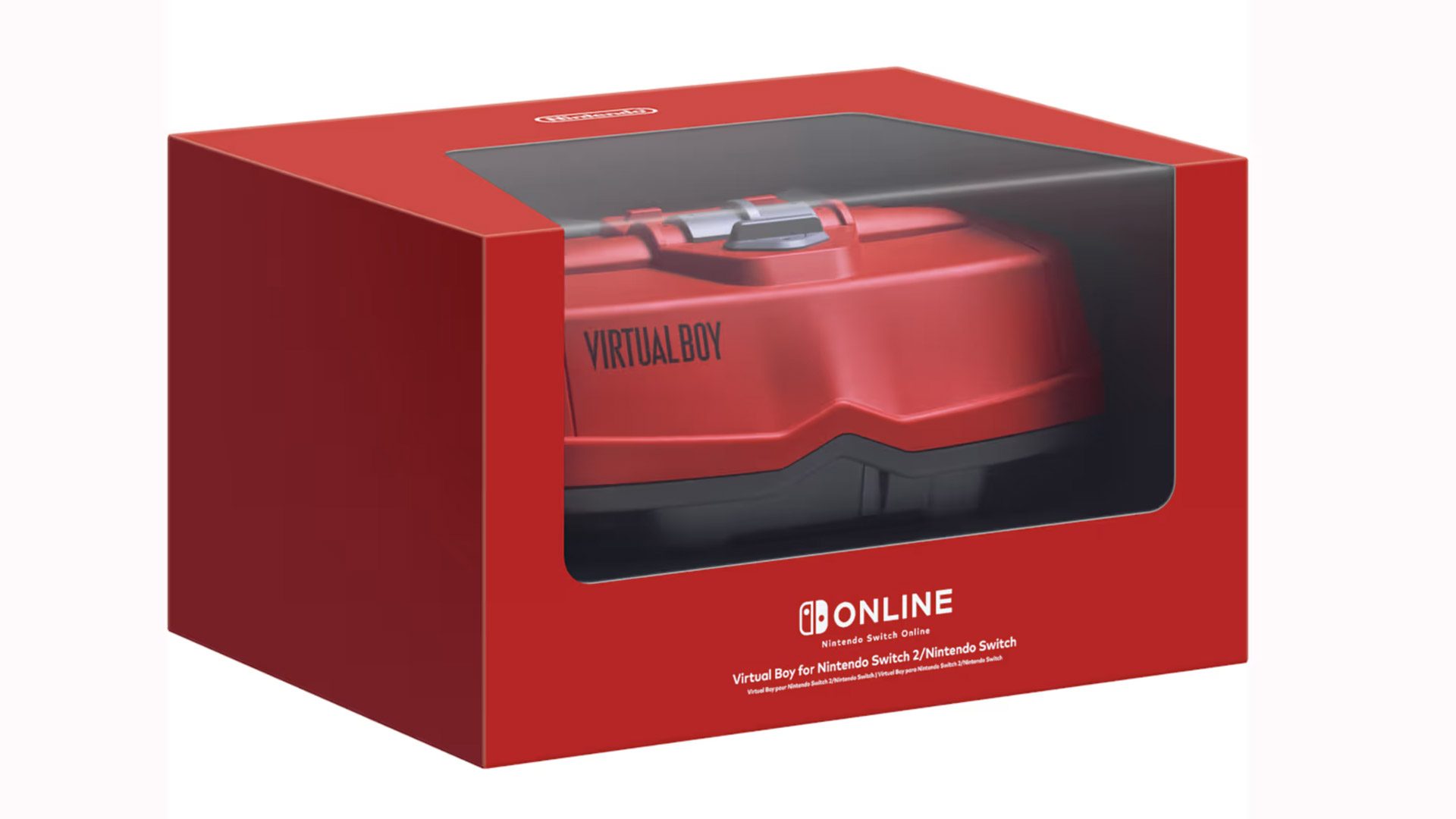
Image courtesy Nintendo

What seemed on its face like an April Fool’s joke, was anything but. In 2025 Nintendo announced it is revitalizing its Virtual Boy console.

First released in 1995, the Virtual Boy was portrayed as a type of “virtual reality” experience, but considering its small field-of-view, lack of motion tracking, and single-color (red) display, it was functionally just a 3D display on a stand. Still, the console has been culturally associated with “virtual reality” ever since—and it’s not exactly a positive association.

Ambitious as it was, Virtual Boy was an infamous failure of a game console, owed largely to its minimal game catalog, single-color display, and reports of motion sickness while playing. It was discontinued less than a year after launch.

The upcoming $100 accessory will use Switch or Switch 2 as the brains (and display) of the device, and it will play original Virtual Boy games like Mario’s Tennis, Teleroboxer, and Galactic Pinball, with a planned total of 14 titles to be launched in time (that may not sound like many, but it’s more than 50% of the entire Virtual Boy game catalog).

Nintendo will also sell a $25 ‘cardboard’ version of the Virtual Boy accessory which will allow Switch to play the same games but without the stand and plastic facade to hold the console.

We still don’t know if the games are simply being emulated or if they have been retouched or remastered. I hope they’ll be at least updated to render at the native Switch or Switch 2 resolutions, rather than the tiny 0.086MP (384 × 224) per-eye resolution of the original Virtual Boy.

What it Means for 2026

Nintendo continues its long history of weird decisions, and I’m here for it.

2026 Wildcards: Snap & HTC
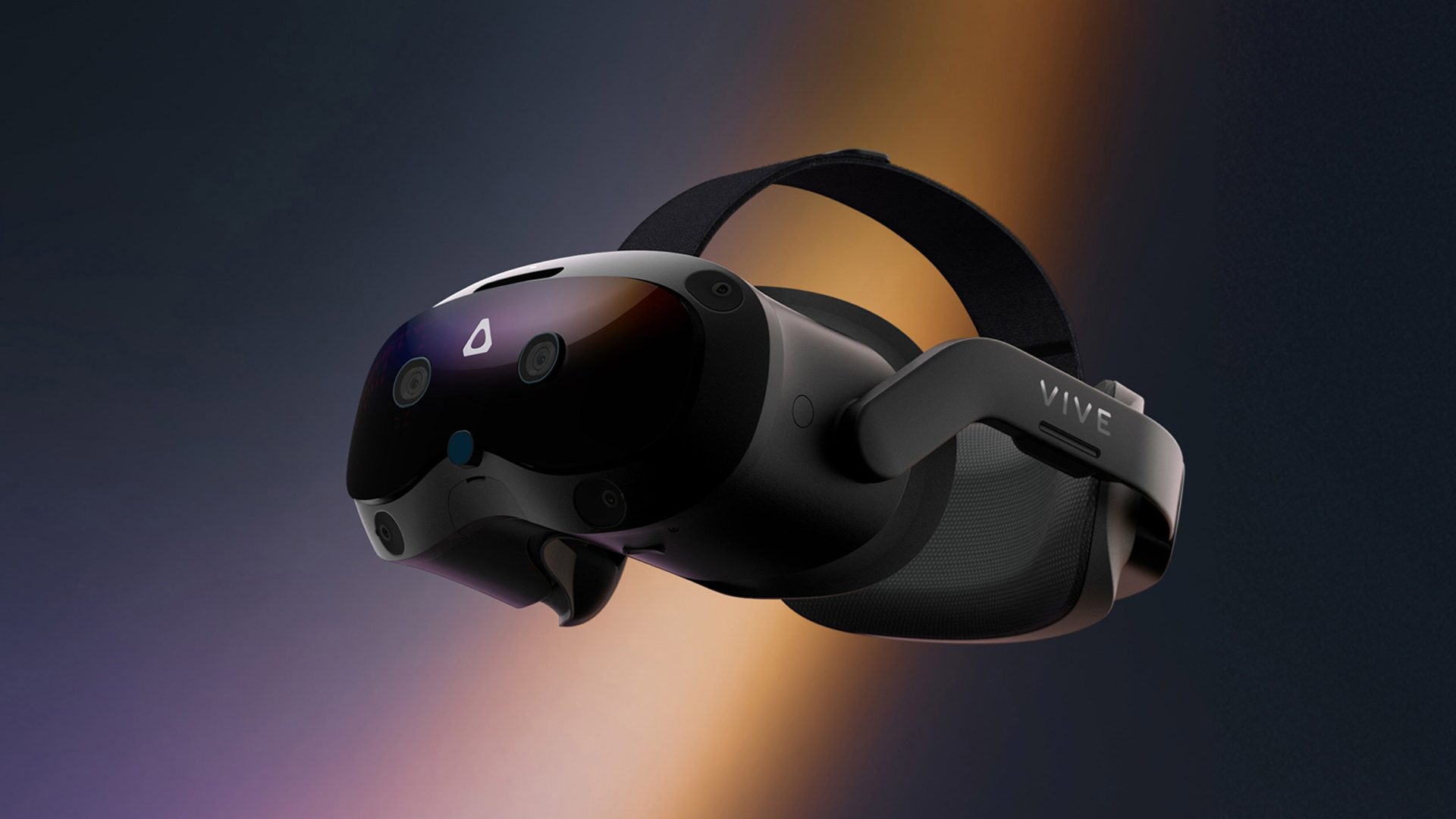
Image courtesy HTC

In my book, the biggest wild cards for 2026 are Snap and HTC.

HTC was once a prominent player in the VR space, having built a long line of PC VR headsets that rivaled Meta’s Rift. But once Meta shifted focus to standalone, HTC wasn’t able to keep up. Sure, HTC released several standalone headsets, but none have come close to the consumer and developer traction of Meta’s Horizon.

That’s left HTC meandering over the last several years, culminating last year in the unexpected sell-off of much of its XR engineering talent to Google for $250 million. Since then, HTC has followed Meta into the smart glasses space with VIVE Eagle. But, so far, the glasses have only launched in Taiwan.

Exactly where HTC heads next is unclear. Will it follow Meta’s lead again and shift its primary focus to smart glasses? Or could it swoop in and try to fill the vacuum left by Meta’s pullback from the VR and metaverse space?

The latter could be a significant opportunity for the company which, at very least, has the same core pieces already in place (standalone VR headsets, an app store, and a ‘metaverse’ platform). Not to mention strong traction in the B2B and LBE spaces, which Meta never quite got a handle on.
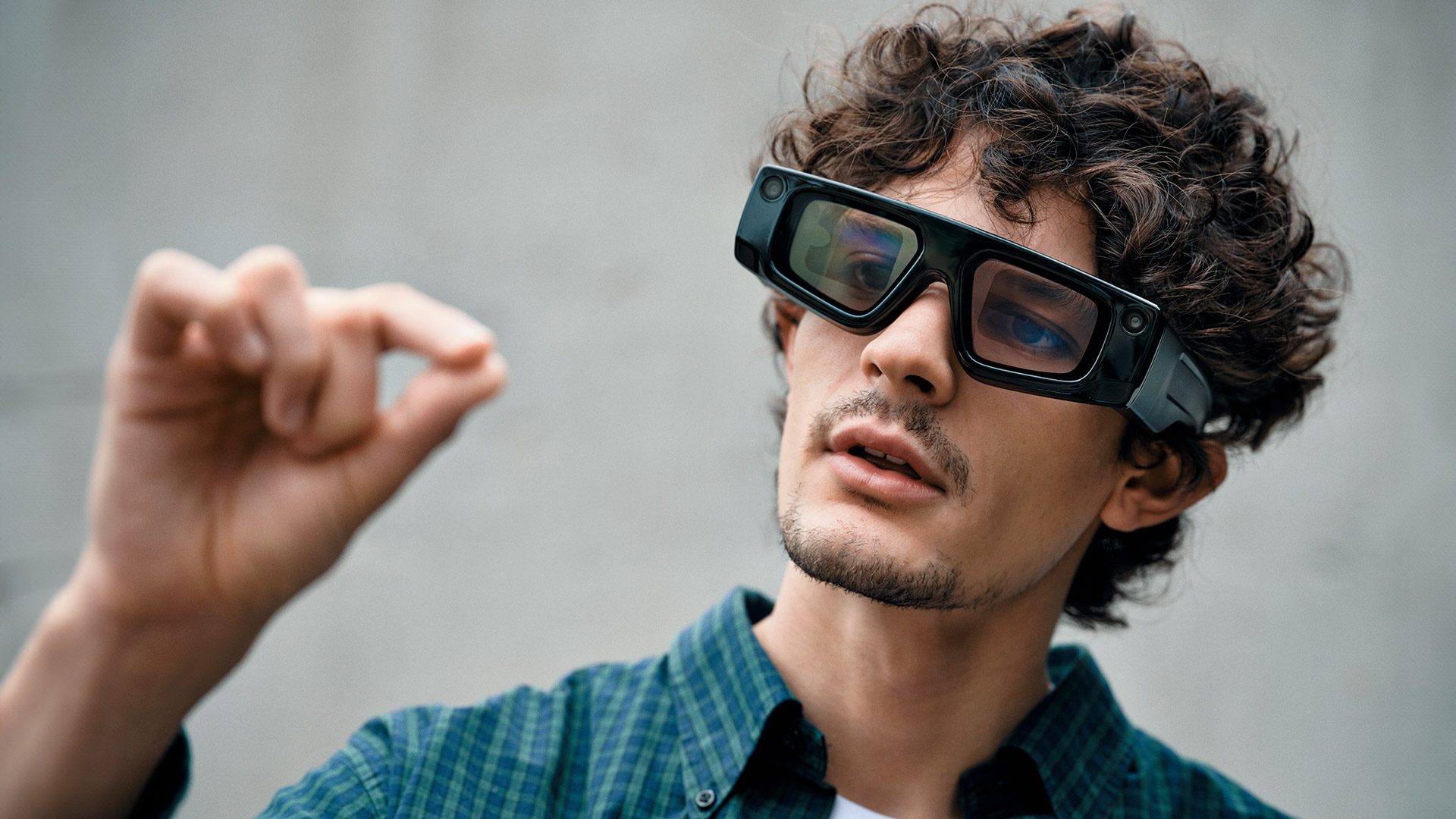
Snap Spectacles (gen 5) | Image courtesy Snap Inc

As for Snap, the company has been planning its entry into the consumer AR space for years at this point. Last year the company’s CEO effectively said that its bet on the AR space is fundamental to the company’s continued existence.

The company has launched two generations of its ‘Spectacles’ AR glasses, and the company has spent time focusing on developers and building out tooling based on feedback.

Snap plans to launch its first pair of consumer AR glasses this year, but it remains to be seen if it has any unique technological advantages compared to what’s already out there. Even if not, it’s possible that Snap’s social and fun-focused approach to AR glasses could be a winning play, especially if it can successfully draw its fleet of Snapchat AR developers over to its glasses. The company says that’s the plan, anyway, as it has been building tools that make it easier for developers to build Lenses that span both hand-held and head-worn AR.

– – — – –

As someone who has been reporting on this industry for nearly 15 years now, I truly mean it when I say I believe 2025 will be looked back upon as one of the most significant moments for the XR industry overall. The next five years are certain to see more change, competition, and innovation than the last five years.


What were your biggest XR stories of 2025 and what do you think is coming in 2026? Drop a line in the comments to let us know!


This article may contain affiliate links. If you click an affiliate link and buy a product we may receive a small commission which helps support the publication. See here for more information.

Ben is the world's most senior professional analyst solely dedicated to the XR industry, having founded Road to VR in 2011—a year before the Oculus Kickstarter sparked a resurgence that led to the modern XR landscape. He has authored more than 3,000 articles chronicling the evolution of the XR industry over more than a decade. With that unique perspective, Ben has been consistently recognized as one of the most influential voices in XR, giving keynotes and joining panel and podcast discussions at key industry events. He is a self-described "journalist and analyst, not evangelist."
  • 2025 was very important… but with the latest news by Meta, it means things will slow down a lot in 2026, at least in the VR/MR sector

  • Arno van Wingerde

    Thanks Ben, for putting the “Meta abondening VR” Armageddon scenario into perspective.

    I hope you are wrong in one aspect: Valve!
    I hope that the Steam machine and Frames are getting much wider adoption, mainly for playing 2D VR games on a large screen. Then they might try VR just for the heck of it, since they have all the hardware anyway. Some might even like this, at least doubling the PCVR gaming basis. So hoping for a large adaption, but more realistically a steady growth of the Frame population to millions of potential PCVR users.

    What many people, inclusive you seem to miss out on is that the Frames, albeit with similar specs, may be much better for PCVR than a Quest3 thanks to the higher comfort, better wireless connection and foveating rendering. So your RTX 4060 may outperform an RTX 4070 Ti or even perform like an RTX 4080 with a Quest3 due to foveated rendering – which may be a game-changer.

    If that happens, Valve or a third party (ASUS, Lenovo, BigBeyond?) in cooperation with Valve may develop hi-res OLED based foveated Steam compatible headsets which will open PCVR Nirwana, perhaps replacing the Steam Machine with an RTX 4080 for the fanatics….

    • Christian Schildwaechter

      TL;DR: the main point of Frame is lowering friction, one of the weak points of Quest; performance gains from ETFR will require developers to implement it, but I expect Valve to convince them by adding it to HL:A

      I fully agree that "but Frame doesn't provide much over Quest 3 for PCVR" statements completely miss what Valve is aiming for. The optics, display type, resolution and controllers may be similar. But the whole point of pushing down the weight and balancing it with the battery, plus their foveated streaming pretty much getting rid of all the latency and visual artifacts issues that kept people asking for a DP connection, is making using the headset a very frictionless experience.

      Frame is in fact a streaming first HMD, so going directly against the Quest 2/3 HMDs that currently dominate PCVR streaming instead of counting on running PCVR games on the HMD itself. Valve engineers said that running games locally may drain the battery in an hour, while streaming will get you to something like four, while there isn't that much difference between running or streaming games on Quest with about two hours. Meta HMDs are great at prices and horrible at ergonomics, which admittedly is a very difficult problem that Valve addressed by making the HMD very modular to allow to modify or add whatever strap solution works best for you. For someone like me who had to modify every single HMD to make them even bearable, and cannot wear the Quest 3 with its default strap for more than a few minutes without getting a headache, the Frame will probably win by default.

      One of Valves aims to reduce friction further was for gamers not having to choose beforehand what they want to play. If you are in the mood to play something, you can pick up the frame, launch Steam, browse through your library and pick either a VR title or a flat game, which all will be supported thanks to the controllers offering full input parity with Xbox or PS controllers in addition to the very powerful Steam Input that, like on Steam Deck, will come with custom input layouts for games, plus the option to change these on the fly to your liking. The whole idea is getting the system out of the way and letting you play your games without hassle or discomfort.

      The performance boost from ETFR will be not as universal though, as games still have to implement it directly. I'm still hoping for some generic Gamescope wizardry, but so far only foveated streaming uses eye tracking by default with all games, while the render performance won't automatically change. A 4060 will still only perform like a 4060.

      There are a number of games already supporting ETFR/DFR, mostly for use with the Pimax Crystal, but that list is something like 100 titles out of over 5000 games on Steam that list VR support, and many of these will never see another update. Hence my hope for Valve wizardry, adding something like a forced lower resolution with the virtual Gamescope framebuffer, then applying FSR4 upscaling and massive supersampling only in the current foveated area, all of which could be done in the Gamescope compositor without the original game having to be modified. And if Valve doesn't try, I hope someone else will, possible thanks to the open source SteamOS. The Steam Deck already provided system wide FSR 1 that was also used in 3rd party tools like openvr_fsr to get resource hogs like FO4VR to run smoothly, and Frame should allow for a lot more tricks than the Steam Deck, both due to eye tracking and motion vectors available from the OpenVR/OpenXR runtime.

      When implemented, foveated rendering should provide a significant performance boost. And doing so should require very little extra effort from the game developer side, so there is a decent chance to see it in many games still receiving updates. I actually expect Valve to provide the first template for that with adding ETFR to HL:A. Not because it really needs a performance boost on PC, it is one of the best optimized and scaling VR games. But they know that tons of people will install it immediately on Frame to run it locally, despite the hardware not really fast enough to run such a heavy title with FEX x86 emulation. One day we may see a native ARM port of HL:A, but as a short term measure adding ETFR may save the day and allow running even the regular PC version on a mobile SoC. People ran HL:A from a Steam Deck in potato mode with reprojection in "playable" form, the Frame's raw emulated performance should be comparable, so with a few extra boosts, HL:A may actually be decent on Frame right from the start. Which would be a pretty compelling argument for other game devs to also add ETFR to their games, even if they already concluded that a Frame port wouldn't make sense. And then the 4060 performing like a 4070 Ti might actually happen.

      • Andrew Jakobs

        I think valve is actually cheating with the weight, as it lacks an audio/mic solution, doesn't have even decent passthrough cameras. And its nice to be able to do addons, but thats also possible on any standalone headset available already and hardly any addon ever was made , except mouth tracking (vive) or smell addon.
        to me the only advantage the frame has over the Quest 3 or Pico 4(ultra) is the much faster soc and of course SteamOS, but the rest isn't anything to write home about. We expect a standalone headset to be somewhat lighter and smaller by now, but we also expect it to have everything onboard like good color stereo passthrough, an audio solution and now also eyetracking.

        • Christian Schildwaechter

          TL;DR: The Frame includes an audio module with speakers and microphones, and its advantages go way beyond the SoC, thanks to lots of very clever optimizations by Valve that lift it far above just being faster.

          The audio section with dual speakers and dual microphones attaches magnetically directly behind the core module, and they apparently spent quite some effort on it. During the hand-ons Valve engineered detailed how they had dual driver sending audio signals in two opposing directions, because otherwise the vibrations would have reduced tracking accuracy.

          So the audio section isn't part of the 185g core module, but part of the 440g total weight of Frame. And this solution allows for third parties to release straps similar to those on Index with off-ear headphones, or use bluetooth headphones, or for someone mostly interested in productivity use to simply remove the audio section and, with a proper strap, have the core module just floating in front of the face without touching it, similar to what was possible on Quest Pro.

          But much more important than the total weight will be weight distribution, with the core module only making up 42% of the HMDs total weight. How well the balancing with the battery pack works with the default wide soft strap remains to be seen, and will depend a lot on how stiff it becomes in actual use. I'm still somewhat astonished they plan for an extra comfort kit that adds a top strap instead of bundling it by default, but I'll give them the benefit of the doubt that Frame will be fine without it until we get actual reviews.

          I wouldn't count on add-ons either, even if later adding hires passthrough might be a nice option. It seems unlikely that Valve didn't include it due to weight, as adding a pair of hires color cameras would only have added a few grams. My guess is that they wanted to avoid the significant computational load that comes with passthrough geometry correction unless you do it on a dedicated chip like Apple does with the R1. On Quest 3 you pay for color passthrough with reduced performance, and it is still not particularly good. So Valve probably decided it simply wasn't worth it, and adding it later via an add-on will introduce the same issues. I would have liked color passthrough too, but Valve positions Frame as a pure gaming HMD with zero interest in MR games. For convenience issues like finding your controllers the PSVR2 class b/w passthrough will be fine, the main disadvantage will be that those playing flat games on a large virtual screen won't see their own room in color and will have to settle with a virtual environment.

          But overall I expect the Frame's advantages to go far beyond the faster SoC, with hardware, software and doing things smarter. The SD 8 Gen 3 is faster, but not optimized for constant load applications. So without specific optimizations, the Frame would show similar thermal throttling issues like we saw on Gear VR or Daydream using regular phone SoCs. Valve's workaround was very precise testing to find out which parts of the SoC produce which thermal load under what specific conditions, and then create game specific core configurations and speeds, so some games may run only on efficiency cores, others use the burst optimized high performance core. The faster SoC alone wouldn't be all that useful if they had to underclock it to make sure there is enough thermal headroom like Meta does with the CPU in their XR2 SoC, but paired with some very fancy dual-sided heatpipes plus that game specific configuration, it should punch way harder than any XR2.

          A lot of that extra performance will be eaten by FEX x86 emulation, but even there the game specific optimization strikes. FEX allows to configure what is actually emulated, so they could for example enable AVX2 emulation or not. And depending on game they will enable whatever provides the most benefits. Which could mean deliberately deactivating AVX2, forcing the game to fall back to SSE4, which might lead to an overall improved performance because other parts can run faster. And that's just the things they mentioned during the hand-ons, I expect there to be a lot more.

          They recently released the Steamworks documentation for Frame, revealing some interesting details. They not only support FEX for x86 emulation, Proton for Windows, Lepton for Android and OpenXR for general VR compatibility, but support a number of Meta specific OpenXR extensions for direct compatibility. And by now many Quest developers have gotten their Frame dev kits, and most Quest apps run pretty much out of the box. The Steam Deck became the ultimate emulation machine, and I am now wondering if soon I will finally be able to play my large Oculus Go library again, after Meta removed backwards compatibility on Quest 2 for idiotic reasons. And how long it will take for someone to write a wrapper that converts Oculus 0.8 SDK calls, so people can once again experience the original 2013 DK1 Rift Coaster on a 2026 Steam Frame.

          And Frame supports eye tracking and dynamic foveated rendering, which still requires integration by developers. But of course people hacked DFR for Pimax Crystal into Skyrim VR, so I have no doubt that someone will get Skyrim to run on Frame with ETFR and modern upscaling thanks to everything being open. It's not only that the headset supports eye tracking, which should be the default, and not adding it to Quest 3 just in case was IMHO a big mistake by Meta. It is what you can actually do with it with all the other components like the Gamescope compositor that allows for lots of nifty post-processing options even for a decade old PCVR titles, abandoned years ago, and released long before their devs even considered mobile HMDs, foveated rendering or eye tracking.

  • XRC

    Having lived through the first wave of consumer VR in 1990's with hype inflating an investment bubble that wasn't supported by the technology of the time, leading to it's eventual collapse.

    Perhaps we are seeing the end of the second wave of consumer VR (2016-2026)?

    Just my 10 cents.

    • Christian Schildwaechter

      TL;DR: The big difference is that today's VR is actually usable, there is no need to wait a few decades for the tech to become feasible. The sole reason it now seems in danger is that it didn't draw the expected masses. It will remain necessary (and alive) though to develop the features Meta/Apple/Google etc. want in future smartglasses/AR glasses, which will still take a decade or two to become powerful enough to do all this.

      There is a big difference between 90s VR and 2026 VR: back then even something running on a USD 10K VPL EyePhone paired with a USD 250K SGI workstation was barely usable, with people demonstrating them at trade fairs reporting they needed to take massive doses of valium after the second day to not throw up.

      Today USD 300 HMDs are absolutely usable, even if they could still benefit a lot from lower weight, better balance, faster SoCs, higher resolution, bigger FoV, better screens and much more. But even if all development stopped today, there would be tons of things they are already completely sufficient for.

      VR in the 90s died (actually retreated to university/industrial/military use) because the technology was nowhere ready. It was literally two decades too early. Current VR now seems in peril because for the large companies engaging in it, it was mostly a stepping stone towards future platforms that didn't deliver the desired user masses.

      But the goals still haven't changed: create a new class of wearable devices that billions will use, potentially replacing smartphones, making the one controlling the platform and taking a cut on all transactions incredibly rich. It was always clear that this would require bringing it down to the form factor and size of regular glasses, which we are still many years away from.

      Meta jumped in with VR HMDs that ten years ago were so limited that video games with completely virtual world were the only viable consumer application. They never wanted to create a gaming platform, they just did to get a head start on Apple and Google, who like other large electronics players had AR and VR research project. Samsung established an internal VR group years before partnering with Oculus on Gear VR.

      And these goals are still there, only the way to get there shifts. While they first went with large, bulky HMDs that allowed for enough tech to implement the required resolution, rendering and later passthrough for the real world interaction they were longterm aiming for, trying to start with the full feature set and then shrinking it down, they will now instead start with the desired form factor that currently only allows for a tiny fraction of the functionality, and over time add more as improved tech and miniaturization allows. The AVP is probably even more of an example than Quest for the "start at the top, then scale down" approach, with Apple cramming everything into a very heavy and ridiculously expensive HMD that now defines the baseline of what the Apple Vision experience is, getting lighter and cheaper over time.

      And there is little doubt that both Apple and Meta will continue to work on HMDs, because they still need to develop all that functionality and content and the matching ecosystem that one day in the not so near future will also become available on (much advanced) smartglasses that the masses very obviously find much easier acceptable than HMDs. The current ones only work as mostly dumb terminals for remote AI due to the extremely limited CPU and power resources, you need something in the class of a Samsung Galaxy XR to properly test/run all the AR integration with Gemini they showed.

      Everybody is still wanting to dominate whatever may come after smartphones, so they will continue to throw billions at it, and XR/VR/MR HMDs are for now the only ones powerful enough to show something like spatial live streaming of Laker's games on a 4K OLED display. They will keep on trying, just with a split approach, hooking the masses with somewhat useful glasses already in the desired form factor, and on the other hand working towards the desired software experience with (hopefully lighter and more comfortable) HMDs targeting a much smaller group of enthusiastic guinea pigs. MR/VR won't die, but VR gamers will probably take a hit with Meta shifting the focus of their HMDs more towards devices like AVP or GXR that are now the test platform for future smart/AR glasses.